Angulo Window Angulo Window

Why Choose Energy Efficient Aluminum Windows?

Time:2026-10-03 Author:Amelia
0%

Energy efficient aluminum windows combine clean design, structural strength, and improved indoor comfort. Aluminum frames can support large glass panels and narrow sightlines, allowing more daylight into living spaces. They also resist warping, moisture, and many forms of corrosion. However, untreated aluminum transfers heat quickly. A thermal break is essential. It separates the exterior and interior frame sections, reducing unwanted heat flow through the metal.

Choosing the right window requires more than checking the frame material. To understand how to tell if an aluminum window is energy efficient, examine its U-factor, solar heat gain coefficient, glazing, seals, and air-leakage rating. Lower U-factors generally indicate better insulation. Low-emissivity glass can reduce heat transfer while maintaining clear views. In warm climates, a suitable solar-control coating may reduce heat gain. In colder areas, carefully selected glass can help retain indoor warmth. Look for performance labels from recognized testing organizations, such as NFRC or ENERGY STAR, where applicable. Ask for documented test results. Marketing language alone is not enough.

Details matter.

A dependable installer should also check frame joints, drainage paths, and compression seals. Small gaps around the perimeter can weaken an otherwise efficient window. Installation quality is often underestimated. The most expensive product can perform poorly when fitted carelessly. Energy efficiency also depends on orientation, shading, ventilation, and local weather. No window solves every comfort problem. A thoughtful selection balances insulation, daylight, durability, appearance, and budget. The perfect specification may not exist, but a carefully verified one can deliver noticeable comfort and lower heating or cooling demand.
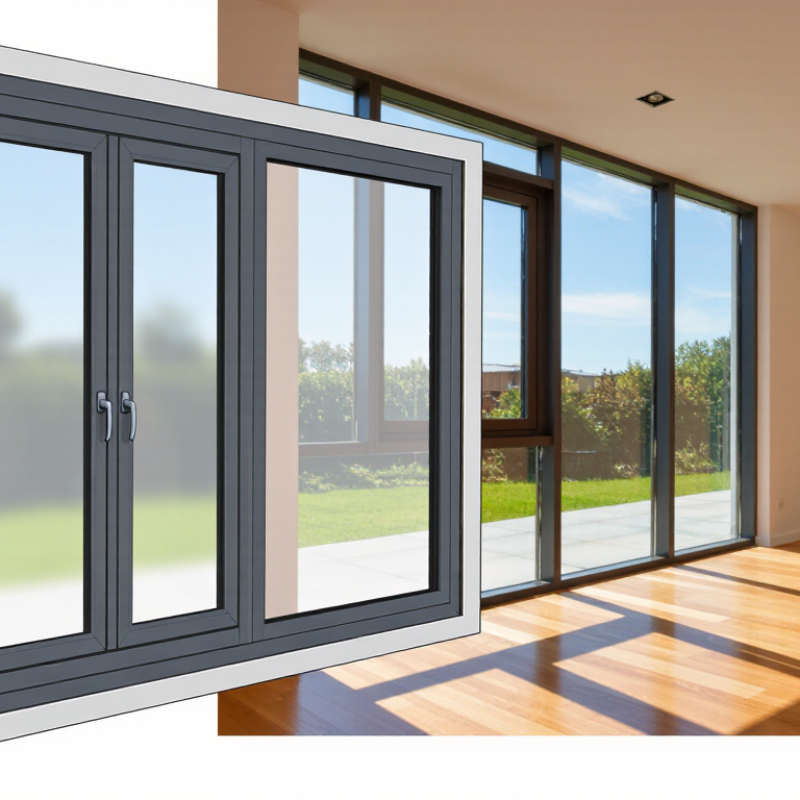
Why Choose Energy Efficient Aluminum Windows?

What Defines an Energy-Efficient Aluminum Window?

An energy-efficient aluminum window is not defined by its frame alone. Its performance comes from the frame, glass, seals, hardware, and installation working together. Aluminum conducts heat quickly, so a thermal break is essential. This insulated section separates the inner and outer metal surfaces, reducing heat transfer through the frame.

The glass package matters just as much. Double or triple glazing, low-emissivity coatings, warm-edge spacers, and inert gas fills can improve insulation. A low U-value indicates better resistance to heat flow. However, it does not tell the whole story. Solar heat gain, visible light, air leakage, and condensation resistance also deserve attention. A sunny south-facing room may need different glass from a shaded bedroom.

Details matter on site. Continuous weather seals should close firmly without gaps, while drainage paths must remain clear. Poor installation can weaken an excellent window. I have seen small perimeter gaps create cold drafts and damp marks near the sill. That result is easy to blame on the product, but workmanship may be responsible.

Reliable performance should be supported by recognized testing and clearly stated ratings. Some specifications look impressive until installation conditions are examined. This is where I would remain cautious. Energy savings also depend on climate, shading, room ventilation, and occupant habits. An efficient aluminum window reduces unwanted heat movement, but it cannot correct every building problem.

How Aluminum Window Design Reduces Heat Transfer

Why Choose Energy Efficient Aluminum Windows?

Aluminum windows can reduce heat transfer when their frames are designed as thermal systems. A standard aluminum frame conducts outdoor heat inward during summer. Thermal breaks interrupt that path with a low-conductivity polyamide section. The frame becomes less continuous. This detail matters.

The U.S. Department of Energy reports that windows can cause 25–30% of residential heating and cooling energy use. Better aluminum designs address this loss through thermal breaks, insulated chambers, and carefully sealed joints. Low-emissivity glass reflects infrared energy, while double or triple glazing slows conduction. Warm-edge spacers also reduce heat movement around the glass perimeter.

The National Fenestration Rating Council identifies U-factor and Solar Heat Gain Coefficient as key performance measurements. Lower U-factor generally means better insulation, while a suitable SHGC controls unwanted solar gain.

Installation still decides much of the result. A high-performing frame can underperform when gaps surround the opening. Field experience often reveals this uncomfortable weakness. Air leakage may come from rushed sealing, uneven substrates, or poorly adjusted hardware.

DOE guidance also stresses checking window orientation, shading, and local climate before selecting performance values. A south-facing window needs different solar control than a shaded northern opening. Energy modeling can improve decisions, but it is not always available for smaller projects. That limitation deserves attention.

Manufacturers’ laboratory ratings may not fully represent dusty sites, repeated opening, or imperfect installation. Regular inspection of seals and drainage paths helps preserve the intended thermal performance.

Key Features That Improve Window Energy Performance

Why Choose Energy Efficient Aluminum Windows?

Aluminum windows can perform well, but the frame design matters greatly. A continuous thermal break separates the exterior metal from the interior metal. This reduces heat flow through the frame and limits cold interior surfaces. Without it, aluminum can conduct heat quickly. That weakness is easy to overlook.

High-performance glazing also improves energy performance. Low-emissivity coatings reflect infrared heat while allowing useful daylight inside. Argon-filled double glazing adds resistance between the glass layers. Warm-edge spacers reduce heat transfer around the glass perimeter. The U-factor measures heat loss, while the solar heat gain coefficient shows how much sunlight enters. Lower U-factors help in cold climates, but lower solar gain may work better in hot regions. Window selection is not universal.

The U.S. Department of Energy reports that windows can account for 25–30% of residential heating and cooling energy use. The National Fenestration Rating Council identifies frame, glass, and air-leakage performance through standardized ratings. Tight weather seals matter too. A small gap can create a noticeable draft near a bedroom chair. Professional installation protects the rated performance, especially around flashing and perimeter insulation. Still, specifications are not the whole story. A highly rated window can disappoint when poorly installed, shaded incorrectly, or opened frequently. Getting the details right takes more than choosing the lowest U-factor.

Why Choose Energy Efficient Aluminum Windows? - Key Features That Improve Window Energy Performance

Energy-Performance Feature Typical High-Performance Data How It Improves Performance What to Check in Product Specifications Relevant Test or Rating Reference
Whole-Window U-Factor 0.20–0.30 Btu/h·ft²·°F
(1.14–1.70 W/m²·K)
A lower U-factor means less heat flows through the complete window assembly, including the frame, glazing, spacer, and sash. Use the certified whole-window value rather than the center-of-glass value alone. The appropriate target depends on climate and local energy requirements. NFRC 100; local building or energy code requirements
Thermally Broken Aluminum Frame Polyamide thermal barrier commonly about 20–30 mm in high-performance systems Separates the interior and exterior aluminum sections, reducing conductive heat transfer and limiting interior surface temperature swings. Look for a continuous, insulated thermal barrier that extends around the frame and sash, with verified whole-window testing. NFRC thermal-performance ratings; AAMA/WDMA/CSA fenestration standards
Low-E Insulating Glass Double glazing: approximately 24–32 mm overall
Triple glazing: approximately 36–52 mm overall
Low-emissivity coatings reduce long-wave radiant heat transfer, while multiple panes create insulating cavities. Confirm the glass make-up, number of panes, Low-E coating position, and certified U-factor and SHGC. NFRC 100 and NFRC 200; ISO 10292 for glass thermal transmittance
Insulating Gas Fill Argon: about 90% fill
Krypton: used where narrower cavities are required
Gas fills with lower thermal conductivity than air can reduce heat transfer through sealed insulating glass units. Check that the unit is factory-sealed and that gas-fill performance is included in the certified rating. IGU fabrication and durability requirements under ASTM E2190 or equivalent standards
Warm-Edge Spacer Lower-conductivity spacer materials than conventional aluminum spacers Reduces heat loss at the glass perimeter and helps raise the inside-edge temperature, lowering the risk of condensation. Review the spacer material, edge-of-glass temperature performance, and condensation-resistance rating. NFRC 500; ASTM C1363 or equivalent thermal testing
Solar Heat Gain Coefficient (SHGC) Common energy-efficient range: 0.23–0.40 A lower SHGC blocks more unwanted solar heat, while a higher SHGC can provide useful passive solar heat in heating-dominated climates. Select the value according to orientation, shading, glazing area, and climate. Lower is not always better for every building. NFRC 200; regional energy-code or project-specific requirements
Visible Transmittance (VT) Often about 0.45–0.70 for energy-efficient clear or Low-E glazing Higher VT admits more natural daylight, which can reduce the need for electric lighting when glare and solar gain are controlled. Balance VT with SHGC, glare control, orientation, and daylighting objectives. NFRC 200; ASTM E1333 or equivalent optical testing
Air Leakage High-performance benchmark: ≤ 0.30 cfm/ft² at 1.57 psf
(approximately ≤ 1.5 L/s·m² at 75 Pa)
Lower air leakage limits uncontrolled drafts and reduces heating and cooling loads caused by infiltration. Verify the tested air-leakage value for the complete operable window, including seals, corners, locks, and joints. NFRC 400; ASTM E283 or equivalent test method
Water Penetration Resistance Test pressure varies by product and project specification Effective drainage paths, gaskets, and sill design help prevent moisture intrusion that can reduce insulation performance and damage surrounding materials. Check the tested water-penetration pressure and installation details, especially for exposed elevations. ASTM E547 and ASTM E331; AAMA/WDMA/CSA performance classes
Condensation Resistance CR rating is generally reported on a 0–100 scale; higher is better Thermal breaks, warm-edge spacers, and efficient glazing keep interior surfaces warmer and reduce condensation risk under cold conditions. Compare the certified CR value for the complete window rather than evaluating the frame or glass separately. NFRC 500
Weather-Resistant Seals and Hardware Multiple compression gaskets and secure multi-point locking are common in high-performance designs Continuous seals maintain compression around the sash and frame, helping preserve air and water performance over the product’s service life. Look for replaceable gaskets, durable corner joints, adjustable hardware, and installation-compatible flashing details. AAMA/WDMA/CSA 101/I.S.2/A440 or applicable regional standard
Certified Whole-Window Label Reports U-factor, SHGC, VT, air leakage, and sometimes CR Whole-window certification allows fair comparison because the frame, glass, spacer, and operating components are evaluated together. Request a current certification label or laboratory report for the exact size, configuration, glazing, and opening type being specified. NFRC product certification; applicable local energy-labeling program
Performance values are representative ranges or benchmarks for high-performance aluminum window systems. Actual results vary with window size, opening style, glazing configuration, climate, installation quality, and applicable local standards.

Benefits for Comfort, Energy Use, and Environmental Impact

Why Choose Energy Efficient Aluminum Windows?

Energy efficient aluminum windows can make a room feel calmer and more consistent. Thermal breaks reduce heat transfer through the frame. Low-emissivity glass helps retain indoor warmth during cold weather. In summer, it can limit unwanted solar heat. The result is fewer cold edges, less glare, and more stable room temperatures. That comfort is noticeable beside a large window or on a chilly morning. However, window performance depends heavily on professional installation. A well-designed frame cannot correct gaps, poor sealing, or unsuitable glass.

Lower heat transfer may reduce heating and cooling demand over time. Actual savings vary with climate, window orientation, shading, ventilation, and household habits. This is where careful assessment matters. Energy labels and tested U-values provide useful evidence, but they do not tell the whole story. Durable aluminum frames can also support a longer service life, reducing replacement waste. Aluminum is widely recyclable, although recycling still requires collection and processing energy. That environmental benefit should be considered honestly, not exaggerated. A smaller energy bill is helpful, but comfort and reduced resource use matter too.

Tips: Check frame and glass performance together. Ask how installers prevent air leakage. Use exterior shading on sun-facing windows. Inspect seals after severe weather. Do not ignore condensation; it may signal high indoor humidity or a cold surface. Expect improvement, not perfection.

Factors to Consider Before Choosing Aluminum Windows

Choosing energy-efficient aluminum windows starts with performance, not frame color. The U.S. Department of Energy reports that windows can cause 25–30% of residential heating and cooling energy use. That figure makes careful measurement worthwhile. Aluminum is strong, slim, and durable. Yet untreated metal transfers heat quickly. Look for thermally broken frames, insulated cavities, and low-emissivity glazing. The thermal break should separate indoor and outdoor aluminum continuously.

Before choosing a product, compare its NFRC-listed U-factor, solar heat gain coefficient, visible transmittance, and air-leakage rating. A lower U-factor usually means better insulation. SHGC requires climate judgment. In a hot, sunny room, a lower value can reduce afternoon heat. In a cold climate, moderate solar gain may help. The Department of Energy also recommends checking orientation, shading, and local weather. Do not copy a neighbor’s specification. Small detail, big impact. A west-facing window feels different from a shaded north-facing one.

Installation deserves equal attention. A high-rated window can underperform if the sill lacks drainage or the perimeter seal is uneven. Inspect corners, hardware, condensation risk, and maintenance access before ordering. ENERGY STAR estimates annual savings of about $101–$583 for some single-pane replacements. Results vary by climate and house. Treat that range cautiously. Ventilation, heating habits, glass area, and workmanship all matter. I would also request recycled-content data and an environmental product declaration. Operational efficiency is only part of the environmental calculation.

Why Choose Energy-Efficient Aluminum Windows?

Before choosing aluminum windows, compare their NFRC-rated U-factor with the maximum values required by ENERGY STAR® Version 7 for residential windows. A lower U-factor means better resistance to heat transfer and improved energy efficiency.

Aluminum frames should generally include thermal breaks and low-emissivity glazing to achieve lower U-factors. Always check the complete window's NFRC label rather than evaluating the frame material alone. Data source: ENERGY STAR Residential Windows, Doors, and Skylights Version 7.0 criteria.

FAQS

How do thermal breaks improve aluminum window performance?

A thermal break separates exterior and interior metal, reducing heat flow through the frame. A cold frame edge becomes less noticeable.

What glass features support better energy performance?

Low-emissivity coatings reflect infrared heat while preserving useful daylight.

What do U-factor and solar heat gain coefficient mean?

U-factor indicates heat loss through the window. Lower values usually help in colder climates.

Can energy efficient windows reduce heating and cooling costs?

They may reduce energy demand by limiting unwanted heat transfer.

Why does installation matter so much?

Poor sealing can create drafts, even with a highly rated window.

How can these windows improve indoor comfort?

They can reduce cold edges, glare, and uneven temperatures near large windows.

What maintenance should homeowners perform?

Inspect seals after severe weather and check for visible gaps or drafts.

Are aluminum windows environmentally helpful?

Durable frames may last longer and reduce replacement waste. Aluminum is widely recyclable.

Conclusion

Energy-efficient aluminum windows are designed to limit unwanted heat transfer while maintaining strength, durability, and a modern appearance. Their performance depends on features such as thermally broken frames, insulated glazing, low-emissivity coatings, warm-edge spacers, and tightly sealed joints. To understand how to tell if an aluminum window is energy efficient, look for verified thermal performance ratings, reliable air and water resistance, suitable glass specifications, and frame systems that reduce conductivity between the interior and exterior.

Choosing well-designed aluminum windows can improve indoor comfort by reducing drafts, cold spots, overheating, and outside noise. Better insulation may also lower heating and cooling demand, helping reduce household energy use and long-term operating costs. In addition, aluminum’s durability and recyclability can support a more sustainable building approach. Before making a decision, consider the local climate, window orientation, glazing options, installation quality, maintenance needs, and the balance between initial cost and lifetime performance.

Amelia

Amelia

Amelia is a seasoned marketing professional with a wealth of expertise in our company’s core offerings. With an unwavering passion for driving growth and innovation, she plays a pivotal role in shaping our marketing strategies and enhancing brand visibility. A key aspect of her responsibilities......