Angulo Window Angulo Window

Why Use Aluminum Frames for Kitchen Glass Cabinets?

Time:2026-10-18 Author:Aria
0%

Kitchen cabinetry is changing from a hidden storage system into a visible architectural feature. Glass doors reveal neatly stacked plates, warm wood grain, and carefully edited cookware. This shift explains why use aluminum frames for kitchen glass cabinets has become an important design question. The answer involves more than appearance. It includes moisture resistance, structural stability, cleaning effort, and long-term value.

The 2024 Houzz U.S. Kitchen Trends Study identifies cabinetry as one of the most frequently upgraded kitchen elements. It also shows that homeowners continue investing in functional, personalized storage during renovations. Aluminum frames support this direction with slim profiles and broad glass panels. They can create a lighter visual effect than bulky solid-wood doors. They also resist swelling better than many untreated wood components near sinks, dishwashers, and steam. That detail matters in real kitchens.

Performance still depends on the system.

The International Aluminium Institute reports that recycling aluminum uses about 95% less energy than producing primary aluminum. This gives properly specified, recyclable frames a stronger environmental argument. However, aluminum is not automatically the best choice. Poorly finished profiles may scratch, collect fingerprints, or feel cold beside natural timber. Weak hinges can also undermine an otherwise excellent cabinet. These limits deserve honest attention.

This article examines frame finishes, glass safety, load capacity, hardware quality, maintenance, and design flexibility. It also considers practical installation details, such as accurately aligned corners and soft-close hinges. A well-designed aluminum frame should feel almost invisible when opened. Yet it must remain rigid, quiet, and dependable through years of daily use.
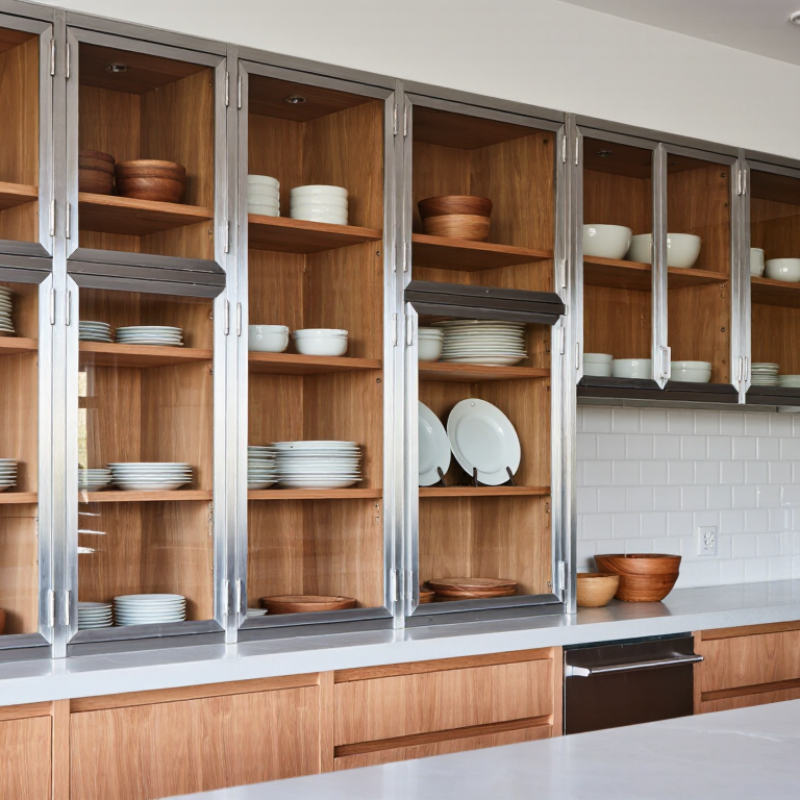
Why Use Aluminum Frames for Kitchen Glass Cabinets?

What Are Aluminum Frames in Kitchen Glass Cabinets?

Aluminum frames in kitchen glass cabinets are narrow profiles shaped around a glass door or panel. Manufacturers usually form them through extrusion, creating consistent channels for glass, hinges, handles, and rubber gaskets. The glass sits inside the frame rather than carrying the full door load. This structure helps protect exposed edges from chips and reduces visual weight around upper cabinets.

In real kitchens, aluminum tolerates steam, splashes, and daily wiping better than many painted wood edges. It also resists swelling when moisture reaches the door perimeter. However, the result depends on wall alignment and hardware quality. A poorly adjusted hinge can make a slim door scrape the cabinet side. That detail is easy to miss. Aluminum is not automatically silent, either; loose glass or missing gaskets may create a sharp rattle. The International Aluminium Institute reports that recycling aluminum uses about 95% less energy than producing primary aluminum, supporting its long service potential when frames are responsibly recovered.

Tips: Ask for the profile thickness, corner-joint method, glass specification, and gasket material. Check one sample door in daylight. Look for even gaps, smooth hinge movement, and clean corners. The U.S. Geological Survey’s Mineral Commodity Summaries treats aluminum as a major industrial material, but availability and recycled content vary by region. So, do not assume every frame has the same environmental profile. A practical choice balances appearance, moisture exposure, repair access, and long-term maintenance.

How Aluminum Frames Support Glass Cabinet Doors

Why Use Aluminum Frames for Kitchen Glass Cabinets?

Aluminum frames give glass cabinet doors a firm, lightweight structure. In daily kitchen use, this balance matters. A framed door must open smoothly, stay aligned, and resist repeated handling. Aluminum supports these demands without making the door unnecessarily heavy. Its rigid profile also helps hold glass evenly along the edges. That reduces pressure on one corner during opening or closing.

The frame supports hinges, handles, and connecting joints with greater consistency. Installers can adjust these parts more accurately when the frame remains stable. In humid kitchens, aluminum also resists swelling and warping better than many wood-based materials. A slim frame leaves more glass visible, so dishes, clear containers, and soft cabinet lighting remain easy to see. Tempered or laminated safety glass should be selected according to the cabinet’s use and local requirements.

Small details still matter. A poorly measured frame can create uneven gaps or a door that rubs against the cabinet. I have seen minor alignment errors become daily frustrations. Aluminum is not a perfect solution. It can show fingerprints, and some finishes may scratch during careless installation. Protective pads, accurate measurements, and regular checks improve performance. Clean the frame with a mild solution, then dry it fully. That simple habit helps preserve both the metal surface and the clarity of the glass.

Why Use Aluminum Frames for Kitchen Glass Cabinets? - How Aluminum Frames Support Glass Cabinet Doors
Evaluation Dimension Typical Material Data Application to Glass Cabinet Doors Practical Benefit
Frame Density Aluminum density is approximately 2.70 g/cm³. A properly designed aluminum profile can provide a rigid perimeter structure without adding the mass of a solid metal frame. Helps keep door weight manageable for hinges, lift systems, and everyday opening.
Glass Weight Reference 6 mm soda-lime glass weighs approximately 15 kg/m². A 600 × 700 mm panel weighs about 6.3 kg before adding the frame and hardware. The aluminum frame surrounds and supports the glass panel while distributing loads around its edges. Improves edge protection and makes the door easier to handle during installation and use.
Common Glass Thickness Approximately 4–6 mm for many framed cabinet-door applications; the final thickness depends on the profile and hardware design. The profile channel and glazing gasket are selected to match the glass thickness. Provides a secure fit while allowing the door design to remain visually light.
Rigidity and Shape Retention Aluminum has an elastic modulus of approximately 69 GPa and maintains stable dimensions when properly profiled. Extruded sections can be shaped with reinforcing ribs, channels, or deeper walls around the glass perimeter. Helps reduce frame flexing and keeps the glass panel aligned during repeated door movement.
Thermal Expansion Aluminum expands at approximately 23 µm/m·K; soda-lime glass expands at approximately 8–9 µm/m·K. The design should include a suitable clearance, gasket, or flexible glazing system between the frame and glass. Allows different materials to expand and contract with temperature changes while reducing stress on the glass.
Moisture and Humidity Aluminum naturally forms a thin protective oxide layer. Anodized or coated surfaces can provide additional surface protection. The frame is suitable for areas exposed to cooking humidity, steam, and occasional splashes when correctly finished. Resists swelling and warping associated with moisture-sensitive frame materials.
Surface Maintenance Finished aluminum has a smooth, non-porous surface that can generally be cleaned with a soft cloth and mild detergent. The frame can be wiped around the glass perimeter without requiring sealing or repainting during normal use. Supports simple kitchen hygiene and reduces routine maintenance time.
Corrosion Consideration Aluminum is corrosion-resistant in normal indoor conditions, but aggressive chemicals, salt deposits, and dissimilar-metal contact can cause surface damage. Use a suitable finish, avoid abrasive cleaners, and prevent standing water in joints and channels. Helps preserve the frame appearance and service performance in a kitchen environment.
Glass Edge Protection A frame and gasket can cover and isolate the glass edge from direct impact. The profile holds the glass along its perimeter rather than leaving the edge fully exposed. Reduces the likelihood of edge chipping during installation, opening, and accidental contact.
Door Alignment Aluminum profiles can be manufactured with consistent straightness and repeatable connection details. Consistent frame geometry supports accurate hinge positioning and uniform gaps between adjacent doors. Creates a cleaner cabinet appearance and smoother door operation.
Design Flexibility Aluminum can be extruded into custom cross-sections and finished in a range of colors and surface textures. Profiles can accommodate clear, frosted, tinted, textured, or laminated glass according to the system design. Offers flexibility for modern, industrial, minimalist, and transitional kitchen styles.
Recyclability Aluminum is a recyclable material and can be reprocessed without losing its basic material properties. The frame may be separated from the glass and other components at the end of its service life, subject to local recycling facilities. Can support material-recovery goals when the cabinet is designed for responsible disassembly.
Hardware Compatibility Compatibility depends on profile dimensions, door size, glass weight, hinge type, and the hardware load rating. Hinges, handles, dampers, and lift mechanisms should be selected after calculating the complete door weight. Promotes safer installation and helps prevent premature hardware wear.
Installation Requirement The frame, gasket, fasteners, and glass must be assembled according to the system’s designed tolerances. Glass should not be forced into an undersized channel, and rigid contact between glass and metal should be avoided. Reduces the risk of glass damage, rattling, misalignment, and uneven door movement.

Key Benefits of Aluminum Frames in Kitchen Environments

Why Use Aluminum Frames for Kitchen Glass Cabinets?

Aluminum frames give kitchen glass cabinets a clean, structured appearance. Their light weight reduces pressure on hinges and wall fixings, especially with wide glass doors. In daily use, this matters when doors open repeatedly during cooking. Aluminum also resists moisture better than untreated wood. Steam from boiling pots will not easily swell the frame. A smooth powder-coated or anodized surface wipes clean with a damp cloth. That practical detail helps around oil splashes and flour dust. Glass keeps contents visible, while the frame provides a firm border and reliable alignment.

Kitchen environments are demanding. Temperature changes, humidity, and accidental impacts test every cabinet component. Aluminum remains dimensionally stable, though poorly fitted joints can still loosen. It also supports slim profiles, allowing more glass and less visual obstruction. This can make small kitchens feel brighter and more open. Replaceable hinges and accessible fasteners are useful for maintenance. However, aluminum is not perfect. It can show scratches, and low-quality finishing may discolor near strong cleaners. I would check the coating, corner connections, glass thickness, and load rating before installation. A beautiful cabinet can still fail through careless measurement.

Tips: Choose sealed corners and corrosion-resistant hardware. Confirm that glass edges are polished and properly supported. Leave clearance for door movement. Clean with mild soap, not abrasive pads. Inspect screws after several months. It feels minor. Yet this small check may prevent uneven doors and rattling glass.

Design and Configuration Options for Aluminum Glass Cabinets

Aluminum frames give kitchen glass cabinets a clean structure without making the room feel heavy. In practical installations, slim profiles help display dishes while preserving visual space. Their strength also supports wider doors and taller cabinet sections when the layout is carefully planned. Measure twice.

Configuration begins with the door style. Clear glass suits orderly dishware and bright kitchens, while frosted or ribbed glass hides minor clutter. Sliding doors can save aisle space, but hinged doors usually provide easier access to deep shelves. A mixed arrangement often works well: glass doors above, solid panels below, and open shelving near the preparation area.

Frame color changes the cabinet’s character. Matte black creates contrast, while silver, champagne, or soft gray blends more quietly with surrounding surfaces. Handle position, hinge visibility, shelf spacing, and interior lighting deserve equal attention. Warm LED strips can reveal glassware without producing harsh reflections. However, lighting needs concealed wiring and sensible heat control.

Aluminum is moisture-resistant, but it is not maintenance-free. Fingerprints may stand out on dark finishes, and poorly adjusted doors can rattle against glass. I have found that small gaps and uneven wall lines often affect the final appearance more than expected. Adjustable shelves make future changes easier, especially when cookware sizes change. The best configuration balances display value, daily access, cleaning effort, and the cabinet’s relationship with the entire kitchen.

Why Use Aluminum Frames for Kitchen Glass Cabinets?

Aluminum combines a relatively low density with strong corrosion resistance, making it suitable for lightweight kitchen glass cabinet frames. The chart compares representative material densities commonly considered for cabinet construction.

Representative density values: aluminum 2,700 kg/m³, mild steel 7,850 kg/m³, stainless steel approximately 8,000 kg/m³, and hardwood approximately 600 kg/m³. Wood density varies by species and moisture content.

Maintenance, Durability, and Installation Considerations

Why Use Aluminum Frames for Kitchen Glass Cabinets?

Maintenance, Durability, and Installation Considerations

In kitchen glass cabinets, aluminum frames offer a clean structure without the swelling common in untreated wood. This matters near sinks, dishwashers, and steaming cooktops. During routine inspections, I look for dried grease around corners and hinge points. A soft cloth, mild soap, and prompt drying usually handle these deposits. Harsh abrasive pads can dull the surface. Small scratches collect grime. Anodized finishes often resist corrosion, but they are not damage-proof. Dropped cookware can dent a narrow frame, especially at exposed edges. I once underestimated this risk in a busy family kitchen. The frame remained usable, but its appearance suffered.

Durability also depends on accurate installation. The cabinet opening must be square, level, and strong enough to support the glass assembly. Even a small twist can create uneven gaps or stress the hinges. Installers should measure twice and avoid forcing misaligned panels into place. Tempered glass is a practical choice because it handles normal kitchen impact better than ordinary glass. Still, it can break under severe force. Protective pads beneath the frame may reduce vibration and prevent contact with stone or ceramic surfaces. Check every screw after installation, but do not overtighten them. Excess pressure can distort the frame. In my experience, careful adjustment takes longer, yet it prevents doors from rubbing months later. One detail is easy to miss: leave enough clearance for cleaning around the glass edges.

FAQS

Why are aluminum frames suitable for kitchen glass cabinets?

They resist moisture better than untreated wood. Steam is less likely to cause swelling. Their slim edges also keep the cabinet looking open.

How do aluminum frames handle daily kitchen use?

Their light weight reduces pressure on hinges and wall fixings. This helps when wide doors open repeatedly during cooking. They still need accurate alignment.

Are aluminum frames easy to clean?

Yes. Use mild soap, a soft cloth, and prompt drying. Avoid abrasive pads because they can dull the surface and trap grime in scratches.

Can aluminum frames resist heat and humidity?

Aluminum remains dimensionally stable during normal kitchen temperature changes. Humidity near sinks and steaming cooktops is usually manageable. Poor joints may still loosen.

What glass should be used with aluminum cabinet frames?

Tempered glass is a practical choice for normal kitchen impacts. Its edges should be polished and properly supported. Severe force can still break it.

What installation details matter most?

The cabinet opening should be square, level, and strong. Leave clearance for door movement and glass-edge cleaning. Do not force misaligned panels into place.

What are the main disadvantages of aluminum frames?

Narrow frames can dent after contact with heavy cookware. Scratches may collect grease and dust. Low-quality finishes can discolor near strong cleaners.

How can homeowners reduce rattling and uneven doors?

Use protective pads beneath the frame and check screws after installation. Tighten carefully, not excessively. I once underestimated this small adjustment, and the door later rubbed.

Conclusion

Aluminum frames are a practical and stylish foundation for kitchen glass cabinets, offering a clean structure that surrounds and protects glass panels while supporting smooth door operation. They help distribute weight, improve stability, and provide a secure fit for cabinet doors, making them suitable for both upper storage units and display cabinets. The question “why use aluminum frames for kitchen glass cabinets” can be answered through their combination of strength, light weight, corrosion resistance, and modern appearance.

These cabinets can be customized with different glass types, frame finishes, door styles, opening methods, and interior configurations to match various kitchen layouts. Aluminum is also easy to maintain, requiring only routine cleaning to preserve its appearance. With proper measurements, suitable hardware, and careful installation, aluminum-framed glass cabinets can remain durable and functional for years. Their flexible design makes them a useful choice for organizing dishes, glassware, and decorative items while keeping the kitchen bright, open, and visually appealing.

Aria

Aria

Aria is a dedicated marketing professional with a deep passion for innovative strategies and a keen understanding of our company's product offerings. With a wealth of experience in the industry, Aria excels at crafting engaging content that highlights the unique features and benefits of our......