A sliding aluminum door should glide with light, steady pressure. When it scrapes, shudders, or stops halfway, forcing it can bend the frame, damage rollers, or crack the track. Learning how to adjust a sliding aluminum door that is sticking begins with observation, not immediate tightening. Look for packed dust, worn wheels, loose adjustment screws, and a panel that sits unevenly. A two-millimeter height difference can create noticeable resistance.
Mike Holmes, a respected Canadian contractor and renovation expert, often reminds homeowners, “Do it right, not right now.” That advice matters here. Rushing the adjustment may hide the real fault. Clean the lower track with a vacuum and a stiff brush, then wipe it with a slightly damp cloth. Avoid heavy grease, which attracts grit like a magnet. Check whether the rollers turn smoothly and whether the panel remains parallel with the frame.
Small adjustments matter. Turn each roller screw gradually, usually a quarter-turn at a time. Lift the handle side slightly, test the movement, and repeat only when necessary. The door should not wobble or lean. It should close without a hard push.
Do not guess endlessly.
Some doors have damaged rollers, bent tracks, or swollen surrounding materials. Those problems may require replacement parts or a qualified door technician. I have found that the simplest cleaning step is often skipped, while complicated adjustments receive too much attention. That is an easy mistake to make. This guide explains practical checks, careful roller adjustment, alignment testing, and warning signs that indicate a repair has moved beyond a simple home adjustment.
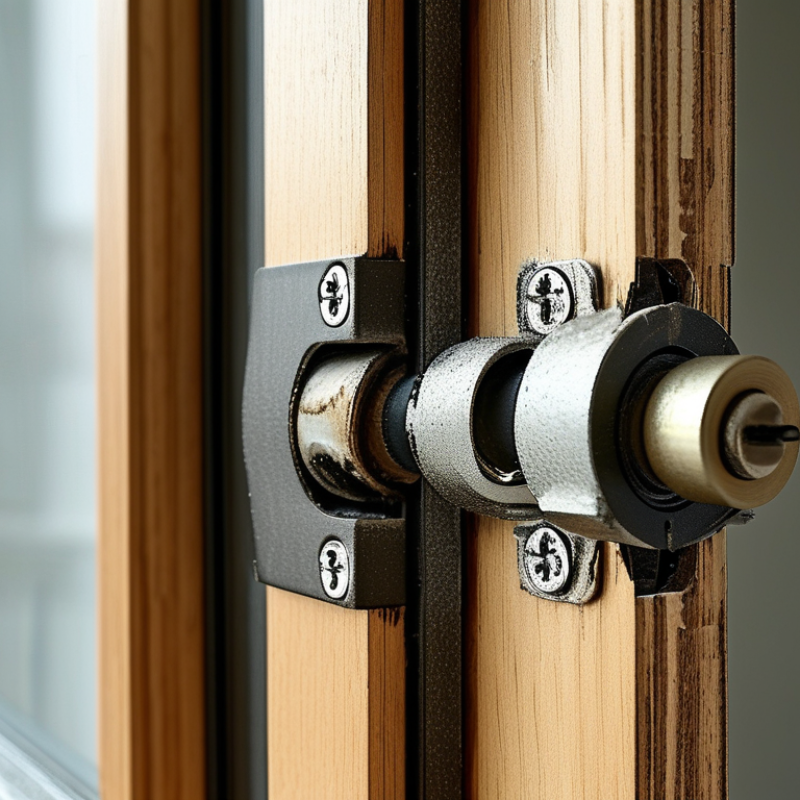
Identify Why the Sliding Aluminum Door Sticks
Before adjusting a sliding aluminum door, identify where resistance begins.
Grit often collects inside the lower track, creating a rough, grinding movement. A bent track can produce one tight spot instead. If the door drags only near one corner, the rollers may be uneven or worn. If it rubs along the entire edge, frame movement or a swollen weatherstrip may be responsible.
The U.S. Department of Energy estimates that windows account for about 25–30% of residential heating and cooling energy use. A poorly sealed sliding door can increase that loss, although the exact effect depends on climate, glass area, and air leakage. DOE Building America guidance also emphasizes inspecting tracks, rollers, seals, and frame alignment before replacing components. That order matters. Do not adjust blindly.
Open the door slowly and watch the lower edge.
Mark the tight point with removable tape. Vacuum the track, then wipe it with a dry cloth; excess lubricant can trap more dust. Check whether the rollers spin smoothly and whether the frame sits squarely. Look for daylight around the seal. A small gap may indicate compression failure, while a door that suddenly sticks after rain may have drainage or debris issues. I have seen people raise the rollers too far, which hides the symptom but adds unnecessary load. Measure twice. Replace damaged rollers only after confirming the track is sound.
Gather Tools and Prepare the Door for Adjustment
Before adjusting a sticking sliding aluminum door, gather the right tools and inspect the work area. You will need a screwdriver set, hex keys, a soft brush, a vacuum, a level, and a flashlight. Keep a clean cloth nearby. Wear gloves and eye protection, especially when removing grit from the track.
Start by clearing furniture and placing the door fully closed. Check whether the frame is loose, damaged, or visibly twisted. Do not force the panel. That can bend the rollers or damage the frame. Use the flashlight to examine both tracks for stones, paint flakes, and compacted dirt. Vacuum the debris, then brush the corners by hand. A dry track often reveals the real problem.
Find the roller adjustment screws, usually near the lower panel edges. Photograph their original positions before turning anything. This small step helps you reverse a poor adjustment. I once skipped it and spent longer correcting my guess. Use the level against the door frame, not the moving panel alone. Confirm the door is supported before lifting or removing it. Large glass panels are heavy, so ask another adult for help. Avoid applying excessive oil; it can collect dust and make the track sticky again. A compatible dry lubricant is usually easier to control, but test it sparingly in one small area.
Clean the Track and Remove Obstructions
A sticking sliding aluminum door often starts with a dirty track, not a damaged roller. Dust, pet hair, sand, and tiny metal flakes can collect inside the lower channel. The door then drags, rocks, or stops before closing. I have seen this happen after only a few months near a patio or unsealed walkway. Start by opening the door halfway. Vacuum the full track, including both corners. Use a narrow brush for packed debris. A dry cloth can remove the final gray film.
For greasy deposits, use warm water and a small amount of mild detergent. Avoid flooding the channel. Water can reach concealed roller hardware and create corrosion. Dry the track completely with a clean towel. According to the U.S. Department of Energy’s Energy Saver guidance, windows can account for 25–30% of residential heating and cooling energy use. A poorly closing glazed door may increase unwanted air movement, although the exact effect depends on its seals and installation. Clean tracks support a tighter, smoother closure.
Inspect the channel with a flashlight. Look for screws, stones, worn brush seals, or hardened sealant. Remove obstructions with plastic tweezers or a wooden stick, not a sharp blade. My first cleaning was too light; the door still felt heavy because grit remained under the roller path. Do not force it. Forcing can bend the frame or damage the adjustment screws. After cleaning, slide the door several times. If resistance remains, the rollers may need adjustment, but the track should be clean first.
7 Tips to Adjust a Sliding Aluminum Door That Sticks - Clean the Track and Remove Obstructions
| Step |
Adjustment Tip |
Typical Time |
Recommended Tools |
What to Check |
Safety Note |
Difficulty |
| 1 |
Inspect the door track |
5 minutes |
Flashlight, soft brush |
Look for dirt, gravel, pet hair, bent sections, or damaged rollers. |
Keep fingers away from the gap beneath the moving panel. |
Easy |
| 2 |
Clean and remove obstructions |
10–15 minutes |
Vacuum, brush, damp cloth, mild detergent |
The track should be free of loose debris and dry before adjustment. |
Do not pour large amounts of water into the track or frame. |
Easy |
| 3 |
Locate the roller adjustment screws |
5 minutes |
Flashlight, screwdriver or hex key |
Adjustment openings are commonly found near the lower door edges or behind small covers. |
Support the panel and avoid removing hardware that secures the glass. |
Easy |
| 4 |
Raise or lower the rollers evenly |
10 minutes |
Correct-size screwdriver or hex key |
Turn the adjustment screw in small increments, then test the door after each change. |
Make quarter-turn adjustments to prevent excessive tilting or binding. |
Moderate |
| 5 |
Check panel alignment and clearance |
5 minutes |
Level, measuring tape |
The panel should sit evenly in the frame, with consistent clearance and no rubbing. |
Stop if the glass shifts, the frame twists, or the panel becomes unstable. |
Moderate |
| 6 |
Lubricate suitable moving parts |
5 minutes |
Dry silicone lubricant, clean cloth |
Apply a light coating to compatible rollers or bearings; the door should move smoothly without attracting grit. |
Do not use grease or oil on the track unless the manufacturer specifically permits it. |
Easy |
| 7 |
Test the lock and repeat the adjustment if needed |
5–10 minutes |
Lock key, level, clean cloth |
The door should slide with steady force, close fully, and lock without lifting or pulling the panel. |
If the door remains stuck, rollers are cracked, or the frame is bent, seek qualified repair assistance. |
Moderate |
Adjust the Rollers for Smooth Door Movement
A sliding aluminum door often sticks because its rollers sit unevenly, not because the frame is damaged. In my repair experience, a small height difference can make the panel scrape the track. Start by vacuuming dirt from the lower rail. Wipe it with a damp cloth, then let it dry completely. Do not spray heavy oil into the track. It can collect grit and worsen the movement.
Find the roller adjustment screws near the lower edges of the door. A flat screwdriver usually turns them, but the fitting may vary. Turn one screw clockwise by a quarter turn. The roller usually rises or lowers gradually. Adjust both sides in small, equal steps. Keep the door supported if it feels unusually heavy. I once turned one screw too far and tilted the panel. That was a mistake. Small adjustments are safer.
Test the door after every turn. It should move without scraping, rocking, or leaving a visible gap. Check the top clearance as well. A roller set too high can press the door against the upper frame. If the panel still drags, inspect the roller housing for cracks or worn wheels. Replace damaged parts rather than forcing the door. After alignment, tighten any loose adjustment covers and run the door several times. A smooth result should feel steady, not merely quiet.
Check Alignment and Test the Door’s Operation
A sliding aluminum door that sticks often needs alignment, not force. Check the door while it is closed. Look at the gaps along both sides and across the top. Uneven spacing can reveal a tilted panel or worn rollers. The frame should appear straight, while the panel should sit evenly inside it.
Tip: Clean the lower track first. Remove grit with a vacuum and wipe it with a damp cloth. Do not apply thick grease, because it can hold dust and make movement worse. Inspect the rollers for cracks, flat spots, or loose hardware. A small flashlight helps you see hidden debris near the corners.
Tip: Adjust the roller screws in small turns. Support the door firmly, then turn one screw slightly and close the panel. Watch whether the gap changes. Test the handle, latch, and sliding resistance after every adjustment. The door should move smoothly without scraping, bouncing, or dropping from the track. If it feels heavy, stop and recheck the alignment rather than tightening everything.
I once adjusted one side too quickly and created a new gap at the top. That was a useful mistake. Both rollers usually need balanced changes. Place a thin card near the frame while testing, but keep fingers away from pinch points. If the panel still binds after cleaning and adjustment, the track may be bent or the rollers may require replacement. Don't ignore a loose frame or damaged glass. A qualified door technician should inspect those problems.
7 Tips to Adjust a Sliding Aluminum Door That Sticks
Use this alignment checklist before replacing hardware. The chart shows practical inspection targets for a typical residential sliding aluminum door. Measure clearances with the door closed, then test the operation after each adjustment.
Start by cleaning the track and checking the rollers. Adjust the roller height until the door is plumb, keep the reveal consistent from top to bottom, confirm that the latch aligns with the strike, and finish by opening and closing the door several times without forcing it.
FAQS
Grit often collects inside the lower track. A bent track can create one tight spot. Worn or uneven rollers may cause corner dragging. A swollen weatherstrip can rub along the entire edge. Start by finding where resistance begins.
Open the door slowly. Watch the lower edge carefully. Mark the tight spot with removable tape. Check whether resistance appears near one corner or everywhere. This simple test prevents blind adjustments.
Prepare screwdrivers, hex keys, a soft brush, and a vacuum. Keep a level, flashlight, gloves, and eye protection nearby. Use a clean cloth for drying. Photograph the adjustment screws before turning them. That small record can save time later.
Open the door halfway. Vacuum the entire track, including both corners. Use a narrow brush for compacted dirt. Wipe away the remaining gray film with a dry cloth. The track should feel clean and dry.
Use warm water with a small amount of mild detergent. Do not flood the channel. Water may reach hidden roller hardware and encourage corrosion. Dry everything with a clean towel. I once cleaned too lightly. The grit stayed underneath.
Check whether each roller spins smoothly. Look for a loose, twisted, or visibly damaged frame. Use the level against the fixed frame. Do not judge alignment from the moving panel alone. A heavy glass panel needs another adult for support.
No. Clean the track and inspect alignment first. Raising rollers too far can add unnecessary load. It may hide the symptom temporarily. Adjust in small increments. Measure twice.
Slide the door several times after cleaning. If resistance remains, adjust the rollers gradually. Replace damaged rollers only after confirming the track is sound. Avoid forcing the panel. Forcing can bend the frame or damage adjustment screws. If the frame is badly twisted, professional inspection may be wiser.
Conclusion
A sticking sliding aluminum door is often caused by dirt, debris, worn rollers, loose adjustment screws, or a door panel that has shifted out of alignment. Before starting, inspect how the door moves, gather basic tools such as a screwdriver, brush, vacuum, and cloth, and protect the surrounding area. If you are wondering how to adjust a sliding aluminum door that is sticking, begin by checking the bottom track and removing any stones, dust, hair, or other obstructions that may interfere with the rollers.
After cleaning, locate the roller adjustment screws, usually found near the lower edges of the door. Turn them gradually and evenly to raise or lower each side until the panel sits level and moves freely. Check that the door remains parallel with the frame and that the latch aligns correctly. Open and close the door several times, making small adjustments as needed. If the door still sticks after cleaning and alignment, the rollers or track may be damaged and require replacement.
 Angulo Window
