Angulo Window
Aluminum sliding doors create bright, attractive openings, but their smooth tracks can become weak points. Learning how to secure aluminum sliding doors against intruders requires more than adding a stronger latch. The entire entry system matters, including the frame, glass, rollers, track, lock, and surrounding lighting.
The FBI’s 2023 Crime Data Explorer recorded more than 847,000 burglary offenses in the United States. Although reported burglaries declined from the previous year, the risk remains meaningful for homes with accessible rear doors. The University of North Carolina at Charlotte’s burglary research found that many offenders look for alarms and avoid targets that appear difficult. Dr. Joseph Kuhns, who led that study, said, “Burglars are looking for the easiest target.” That observation remains practical.
Visible deterrence helps.
This guide examines layered protection recommended by physical-security professionals, including secondary blocking devices, anti-lift measures, shatter-resistant glazing, reinforced strike points, and reliable exterior lighting. The National Protective Security Authority also emphasizes layered security rather than relying on one control. A lock can fail. A track can bend. Glass can break. These details deserve honest attention.
Some homeowners install a patio-door bar and stop there. That is not always enough. A poorly fitted bar may leave clearance near the handle, while an exposed roller adjustment can create another vulnerability. No residential solution is perfect, but careful installation, regular inspection, and sensible habits can make forced entry slower, louder, and less attractive.
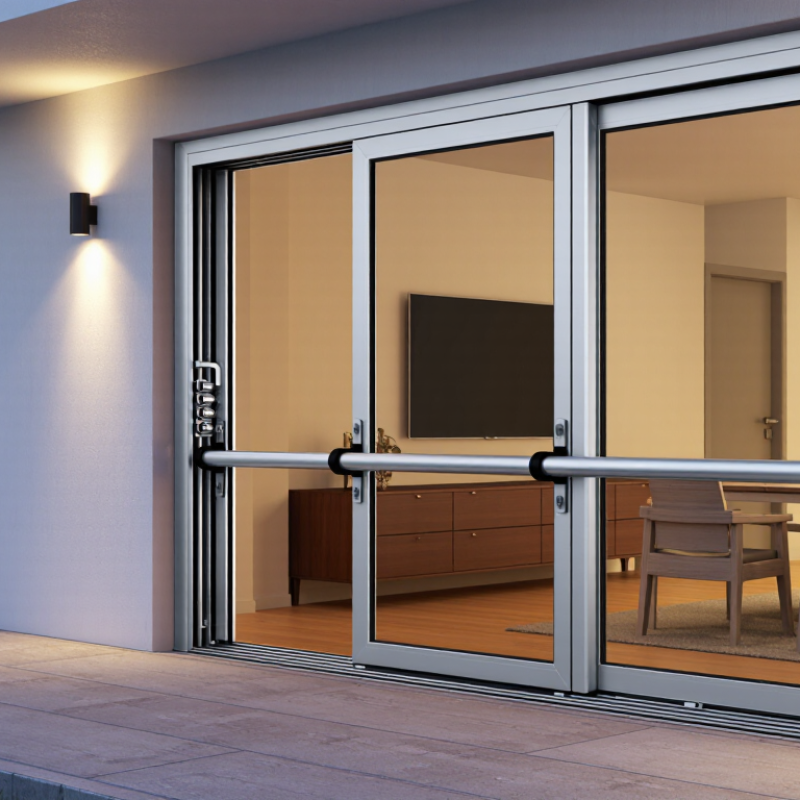
Aluminum sliding doors often look solid, but their security depends on small moving parts. The main weakness is usually the latch, not the aluminum frame. A shallow latch may engage only a few millimeters. Loose rollers can also create a gap between the panel and frame. That gap may allow lifting or movement. Check the door when it is closed. Look for daylight, rocking, or unusual handle movement.
The track deserves careful attention. Dirt, worn rollers, and damaged end stops can reduce the door’s resistance. An intruder may exploit the panel’s movement rather than break the frame. Inspect the upper guide, lower track, screws, and meeting point between panels. The glass is another concern, especially when it is thin or poorly secured. Glazing beads should remain tight, without visible gaps or rattling. Ask a qualified installer to assess laminated safety glass where appropriate.
Small improvements can address several weaknesses. A professionally fitted anti-lift device can reduce panel movement. A secondary locking pin or internal security bar may add protection when the door is occupied. Keep the track clean, but do not assume maintenance replaces a proper lock. It does not. Frame reinforcement may also be needed if the surrounding wall is weak. No checklist is perfect; even a strong lock can fail when installation tolerances are ignored. Recheck the door after seasonal expansion, renovation, or repeated daily use.
How to Secure Aluminum Sliding Doors Against Intruders?
A secure aluminum sliding door starts with a strong, properly fitted lock. Choose a lock with a hardened cylinder and a solid hook or bolt mechanism. The lock should engage deeply into the frame, not just the thin door edge. Check that the strike plate sits firmly against reinforced aluminum. Loose fittings can reduce security quickly. During a home inspection, I look for movement around the lock after closing the door. Even a few millimeters of play deserve attention.
Anti-lift protection is equally important. Many sliding panels can be lifted from the track when the upper clearance is excessive. Install anti-lift blocks at the top of the panel, then adjust them until the door moves smoothly without vertical play. Add a secondary track lock or security bar for extra resistance. The bar should rest securely against the frame, not merely sit on the floor. Keep the lower track clean, because grit can prevent full locking. Small details matter.
Test the door from inside and outside without forcing it. A strong lock can still fail when the frame is distorted or the rollers are worn. I once found a well-locked panel that lifted several centimeters because its top guides were poorly adjusted. That mistake was easy to miss. Review the hardware after seasonal temperature changes, and follow local safety and building requirements. A child-safe opening limit may also be necessary in some homes.
Choose strong locks and anti-lift protection
The chart shows the minimum manual attack-test time associated with European resistance classes under EN 1627. A quality multi-point or hook-bolt lock, reinforced strike points, and anti-lift blocks can help a sliding door achieve stronger resistance when correctly installed. These values are laboratory test durations, not guaranteed protection times in every real-world situation.
Aluminum sliding doors often look strong, yet their weak points are easy to overlook. Intruders may target frame corners, loose tracks, or fragile glass panels. Begin with the frame. Inspect every screw, joint, and locking area for movement. A reinforced strike area helps distribute force across the aluminum, rather than relying on thin metal alone. Use corrosion-resistant fasteners rated for the frame material. An experienced door technician can check whether reinforcement affects drainage or operation. Poorly fitted hardware can create new weaknesses.
The bottom track deserves equal attention. Clean it regularly, then check for bends, gaps, and worn rollers. A properly fitted anti-lift device can limit upward movement when the door is closed. Add a solid stop or security bar only if it does not obstruct emergency exit. Measure twice. The track should remain aligned, and the panel should slide without scraping. I have seen owners tighten one section and accidentally distort the frame. Small adjustments matter.
Tips: Choose laminated or impact-rated glass panels where replacement is practical. Apply security film only when its instructions support the glass type. Film may slow breakage, but it does not replace proper glazing. Check panel edges for exposed gaps, especially near the latch. Test the locked door from inside and outside without forcing it. Photograph loose hardware before repairs; this helps a qualified professional diagnose movement. Recheck the door after heavy rain or seasonal temperature changes. Security work is rarely perfect. Review it often.
Aluminum sliding doors often fail at the latch, not the glass. Start with a contact sensor on the moving panel and fixed frame. When the door separates, the sensor sends an alert to a monitored receiver or phone. Mount it high enough to avoid accidental knocks, but keep it accessible for testing. Test the alarm with the door fully closed and slightly open. A loud alert helps. It does not replace a strong physical barrier.
Security bars can limit forced movement along the track. Choose a bar that fits tightly between the door frame and the opposite jamb. It should resist pressure without damaging the aluminum. Place it where children cannot easily remove it, yet adults can release it quickly during an emergency. Check the bar after installation. Some frames flex more than expected, especially in older buildings. That detail matters.
Add a track pin lock or a secondary latch designed for sliding doors. A small anti-lift block can also prevent the panel from being raised out of its track. Keep the track clean, because grit may stop the lock from seating correctly. Avoid devices that block required exits or create sharp edges near walking paths. In practice, layered protection works better than one impressive-looking product. Still, installation mistakes are common. Review the setup after heavy rain, seasonal movement, or repeated use, and follow local safety requirements.
| Security Measure | Primary Function | Recommended Placement | Installation Notes | Advantages | Limitations | Maintenance Frequency |
|---|---|---|---|---|---|---|
| Security Bar or Track Rod | Prevents the sliding panel from moving when the door is closed. | Inside the lower track or between the sliding panel and the frame. | Measure the closed-door gap carefully. The bar should fit firmly without preventing normal operation. | Simple, low-cost, and works even if the original latch is weak. | Must be removed before opening the door; a poorly fitted bar may be ineffective. | Check fit and condition monthly. |
| Anti-Lift Blocks | Reduces the ability to lift the sliding panel out of the upper track. | At the top of the sliding panel, within the head track. | Maintain a small operating clearance so the panel can still slide smoothly. | Addresses a common weakness of sliding-door designs without changing the visible exterior. | Incorrect adjustment can cause rubbing, sticking, or frame damage. | Inspect during seasonal door servicing. |
| Contact Sensor | Detects when the door is opened or when the panel separates from the frame. | On the fixed frame and the moving sliding panel. | Align both parts closely according to the device instructions and keep them clear of metal obstructions where required. | Provides early notification and can integrate with a compatible alarm system. | May produce false alarms if misaligned, loose, or affected by vibration. | Test monthly; replace batteries according to the device specifications. |
| Glass-Break Sensor | Detects acoustic patterns associated with breaking glass. | On a nearby wall or ceiling with a clear acoustic path to the glass. | Follow the detection range specified for the sensor and avoid placing it behind heavy curtains or furniture. | Can cover larger glazed areas with one properly positioned sensor. | Performance can vary with room acoustics, background noise, and glass type. | Test monthly and keep the microphone opening clean. |
| Motion Sensor | Detects movement inside the room after a possible entry. | Interior corner or wall facing the door, away from direct heat sources. | Aim the detection field away from heaters, strong air currents, and areas where pets regularly move. | Adds a second detection layer if the door is forced or bypassed. | Incorrect placement may cause nuisance alarms or leave coverage gaps. | Test monthly and replace batteries as required. |
| Secondary Latch or Auxiliary Lock | Adds a separate mechanical locking point to supplement the factory latch. | On the meeting stile or frame, based on the lock design. | Use fasteners and mounting surfaces suitable for the aluminum frame; avoid drilling into concealed hardware. | Provides physical resistance without relying on electronic power. | May require professional installation and can affect emergency exit access. | Lubricate and inspect according to the lock manufacturer’s instructions. |
| Security Film or Laminated Glazing | Helps hold broken glass together and can delay access through the glazed area. | Applied to the interior face of the glass or installed as laminated glazing. | Use a properly installed product designed for safety or security glazing; ordinary window tint is not equivalent. | Retains glass fragments and may reduce the speed of forced entry. | Does not make glass unbreakable and may require professional fitting. | Inspect edges and surface condition annually. |
| Track Maintenance and Adjustment | Keeps rollers, tracks, stops, and latches operating correctly. | Lower track, rollers, frame, and locking hardware. | Remove debris, check roller alignment, tighten accessible fasteners, and repair damaged components. | Reduces gaps and prevents a poorly adjusted door from weakening the security measures. | Cleaning alone cannot correct damaged rollers, a distorted frame, or a defective lock. | Clean and inspect every few months or whenever operation changes. |
Practical security approach: Combine a properly fitted physical barrier, an anti-lift measure, and at least one independently powered detection device. Confirm that all additions preserve safe emergency egress and do not interfere with the door’s normal operation.
Aluminum sliding doors need regular testing, not just a strong-looking lock. The FBI estimated 847,522 burglary offenses in 2023, although reported offenses fell 11.7% from 2022. That decline does not make a weak patio door safe. During a monthly check, close the panel fully and engage the lock. Apply firm hand pressure near the handle and the upper corner. The door should not lift, shift, or create visible gaps. Never use forceful tools during a routine test.
Inspect the rollers, track, latch, screws, and anti-lift blocks. Dirt can prevent complete locking. A small stone in the lower track may leave the latch engaged but reduce contact. Vacuum the track, wipe it with a dry cloth, and check for loose fasteners. Replace damaged rollers or cracked hardware promptly. Avoid heavy oil on the track, because it can collect grit and cause uneven movement. The U.S. Consumer Product Safety Commission emphasizes routine inspection of doors and windows as part of household injury prevention, but security checks require closer attention.
Test the door after storms, remodeling, or repeated sticking. Check the frame for bending and the glass for looseness. A simple paper test can reveal compression problems around the seal, but it cannot prove burglary resistance. I have seen owners trust a new lock while ignoring a worn roller. That is an easy mistake. Record each inspection date and photograph defects before repairs. If the panel still lifts after adjustment, ask a qualified door professional to assess the frame and locking points.
The latch is often weaker than the aluminum frame. A shallow latch may engage only a few millimeters. Check handle movement, daylight, and panel rocking.
Remove dirt from the lower track. Look for bends, gaps, worn rollers, and damaged end stops. The panel should slide smoothly without scraping.
Loose upper guides can allow panel movement. A professionally fitted anti-lift device can reduce upward movement. It must not damage the frame.
Inspect screws, corners, joints, and the locking area. A reinforced strike area can spread pressure across the frame. Poor installation may create drainage problems.
Yes, especially when the glass is thin or poorly secured. Glazing beads should stay tight, without rattling or visible gaps. Laminated safety glass may be suitable.
No. Film may slow breakage, but it does not replace strong glazing. Follow the film instructions for the specific glass type.
A contact sensor can detect separation between the moving panel and fixed frame. Mount it high enough to avoid knocks. Test it with the door closed and slightly open.
They can limit forced movement along the track. Choose devices that fit tightly and release quickly during emergencies. Never block a required exit.
Recheck it after heavy rain, seasonal temperature changes, renovation, or frequent use. Small shifts matter. I might overlook one loose screw.
Do not tighten one section without checking alignment. You may distort the frame. Test the locked door from both sides without forcing it. A qualified technician can review uncertain problems.
Learning how to secure aluminum sliding doors against intruders begins with identifying their most vulnerable points, including weak latches, loose frames, exposed tracks, and easily accessible glass panels. Upgrade the door with a strong lock, an anti-lift device, and a properly fitted security bar or blocking mechanism. Reinforcing the frame and track can reduce movement and prevent the panel from being lifted or forced aside. For added protection, consider laminated or strengthened glass and make sure all fittings are firmly attached.
Additional security devices, such as contact sensors, motion detection, and door alarms, can provide early warning when unexpected activity occurs. After installation, test the door from different angles to confirm that it closes, locks, and remains stable under normal pressure. Regularly inspect the track, rollers, frame, glass, and locking components, removing debris and repairing wear promptly. Consistent maintenance helps preserve reliable protection and keeps the sliding door secure over time.
