Angulo Window Angulo Window

2026 How to Fix a Loose Interior Aluminum Door Handle?

Time:2026-10-13 Author:Charlotte
0%

A loose interior aluminum door handle can turn a quiet daily routine into an irritating repair. The handle may wobble, scrape the escutcheon, or fail to retract the latch completely. These symptoms often come from a loose set screw, worn spindle, shifting mounting plate, or damaged internal hardware. Identifying the real cause matters more than tightening the most visible screw.

This guide explains how to fix a loose handle on an interior aluminum door using practical inspection methods and appropriate hand tools. You may need a screwdriver, hex key, flashlight, and replacement screws. A small tray can prevent screws from disappearing under furniture. Before adjusting anything, open the door and test the handle several times. This reduces the risk of trapping the latch inside the frame.

The repair should begin with a careful check of the handle, spindle, rose, and latch connection. Do not force a stubborn screw, because aluminum threads can strip more easily than steel threads. Some handles appear loose because the door itself has shifted, not because the handle is defective. That detail is easy to miss. I have also found that quick tightening can hide worn components for only a few days. If the handle remains loose after adjustment, replacing the damaged fastener or complete handle assembly may be more reliable. Always follow the manufacturer’s fitting instructions when available, and test the repaired door gently before regular use.
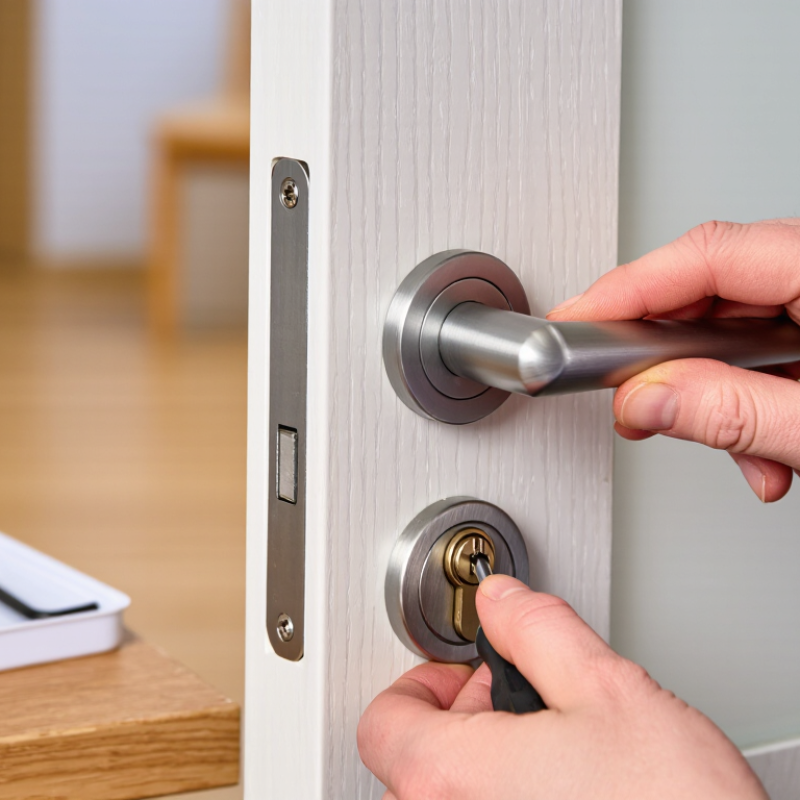
2026 How to Fix a Loose Interior Aluminum Door Handle?

Classify the Failure Using ANSI/BHMA A156.18 Hardware Terms

A loose interior aluminum door handle should be classified before it is tightened. ANSI/BHMA A156.18-2020 primarily defines hardware materials and finishes, not mechanical failure modes. Its finish table distinguishes codes such as 628 for satin aluminum, 626 for satin chromium, and 630 for satin stainless steel. These codes describe appearance and surface treatment, not the cause of looseness.

Inspect the handle at three points: mounting, rotation, and return. If the rose plate moves against the door, record a mounting failure. If the lever turns without retracting the latch, record a spindle or hub engagement failure. If the lever stays down, suspect a return-spring failure. A worn finish, such as exposed aluminum around the grip, is a finish deterioration issue under the A156.18 framework, not proof of structural failure.

My first instinct was to tighten every visible screw. That shortcut can hide stripped threads or a cracked mounting post. Use a flashlight, support the handle, and check whether the fastener rotates without resistance. Do not over-tighten aluminum components. A torque-limiting driver is safer, although many residential repairs skip it. Record the finish code, handle position, fastener condition, and failure symptom. This creates a clearer maintenance record and prevents a cosmetic A156.18 finish designation from being mistaken for a performance rating.

Prepare 2.5–4 mm Hex Keys and a #2 Phillips Driver

2026 How to Fix a Loose Interior Aluminum Door Handle?

A loose aluminum door handle usually needs adjustment, not replacement. Prepare 2.5–4 mm hex keys and a #2 Phillips driver before starting. Keep a small tray nearby for dropped screws. Open the door and inspect the handle’s underside and side plates. One tiny socket screw may hold the lever. Another screw may secure the interior mounting plate. Test each hex key gently. The correct size should enter fully without wobbling.

Loosen the visible cover screws with the Phillips driver. Do not force them. Aluminum threads can strip more easily than steel. Hold the handle level while tightening the mounting screws evenly. Then tighten the socket screw with the matching hex key. Firm is enough. I once over-tightened a similar screw and damaged its head, so restraint matters. Check the lever several times. It should move smoothly without scraping the door face.

Tips: Try the 2.5 mm key first, then move upward only when needed. Never push an oversized key into the socket. If the screw turns endlessly, the internal thread or fixing plate may be worn. Stop and inspect it. A flashlight can reveal a shifted plate behind the trim. The handle may feel secure but still sit slightly crooked. Recheck its alignment before closing the door fully. One imperfect adjustment can become noticeable after daily use.

Inspect the Spindle, Set Screw, Springs, and Mounting Screws

2026 How to Fix a Loose Interior Aluminum Door Handle?

A loose aluminum door handle usually starts with movement at the spindle or mounting plate. Hold the handle still, then operate it slowly. Watch whether the square spindle turns inside the hub. ANSI/BHMA A156.2 testing rates common bored locks from 250,000 to 2 million operating cycles, depending on grade. A loose connection can develop long before that limit.

Remove the handle carefully and inspect the set screw. It should meet the spindle’s flat side, not its rounded edge. Tighten it with the correct hex key, using firm pressure rather than excessive force. Check the spindle for worn corners or a shortened end. Then inspect the return springs. Weak springs may leave the lever hanging downward. Replace damaged springs or the complete internal mechanism when separate parts are unavailable. I once blamed the set screw, but a compressed spring caused the real problem. Small details matter.

Tips: Check both mounting screws behind the cover plate. Tighten them evenly, alternating between sides. Do not crush the aluminum frame. Excessive torque can strip soft metal threads. The U.S. National Institute of Standards and Technology recommends selecting tools and procedures that match the material and connection type. Test the handle at least ten times. Confirm that the latch fully retracts and returns each time. A handle may feel tight while the spindle still slips. That mistake is easy to miss.

How to Fix a Loose Interior Aluminum Door Handle

The chart shows a practical inspection sequence and typical hands-on time for the four main causes of a loose interior aluminum door handle. Start with the spindle and set screw, then inspect the return springs and mounting screws. Tighten or replace only the component that shows wear, damage, or loss of tension.

Realign the Handle and Apply 2–3 N·m of Fastener Torque

2026 How to Fix a Loose Interior Aluminum Door Handle?

A loose interior aluminum door handle often indicates shifted alignment or poor fastener seating. I have found that simply tightening it can hide the real problem. Open the door and support the handle with one hand. Remove the trim cover carefully. Inspect the mounting plate, spindle, washers, and screw threads. Look for cracks, stripped threads, or crushed aluminum. Clean dust and old compound from the fastener.

Realign the handle so the spindle sits squarely inside the latch hub. Keep both mounting surfaces flush. Tighten the fasteners gradually and evenly. Use a calibrated torque wrench and apply 2–3 N·m of torque. This range provides firm seating without overstressing soft aluminum. Do not rely on hand pressure alone. Small tools can exceed this torque surprisingly fast. If service documentation gives another value, follow that specification.

Pause there.

Cycle the handle several times after tightening. It should move smoothly and return without rubbing against the trim. Listen for clicking, scraping, or movement around the mounting plate. If looseness remains, inspect the threads again instead of adding more torque. A damaged fastener may need replacement. A cracked aluminum plate requires professional assessment. I once overlooked a slightly bent washer, and the handle loosened again within days. That small mistake reinforced the value of checking every contact surface.

Test 10 Complete Operations and Confirm Smooth Spring Return

How to Fix a Loose Interior Aluminum Door Handle?

A loose interior aluminum door handle usually comes from loose mounting screws, a worn spindle, or a weak return spring. I begin by opening the door and supporting the handle with one hand. Then I remove the visible cover and tighten each screw carefully. Excessive force can strip the aluminum threads. That mistake is easy to make. If the handle still moves, I inspect the spindle for rounded edges and check whether the spring cassette sits squarely inside the lock case. A small amount of suitable mechanical lubricant may help, but it cannot repair a damaged spring.

Tips: Place removed screws in a shallow tray. Photograph the handle before disassembly. Keep the spindle aligned with the square socket. Check the door edge for loose fixing plates.

After reassembly, I test 10 complete handle operations. Each operation means pressing the handle fully down, releasing it, and watching the spring return. The handle should return smoothly without hesitation, scraping, or uneven movement. I also pull the door gently after every few tests to check for wobble. During the seventh test, I often notice problems missed during a single quick check. If the return becomes slower, I loosen the mounting screws slightly and realign the handle. A damaged spring or cracked internal fitting needs replacement. Do not force it. Smooth return confirms the repair, but repeated testing exposes weak alignment that looks acceptable at first.

FAQS

What tools should I prepare for a loose aluminum door handle?

Prepare 2.5–4 mm hex keys and a #2 Phillips driver. Keep a shallow tray nearby. It catches dropped screws.

How can I find the correct hex key size?

Try the 2.5 mm key first. Increase the size only when needed. The key should enter fully without wobbling. Never force an oversized key.

Which screws should I tighten?

Check the underside set screw and the mounting screws behind the cover plate. Tighten the mounting screws evenly. Keep the handle level.

Why should I avoid excessive tightening?

Aluminum threads can strip more easily than steel. Firm pressure is enough. I once damaged a screw head by overtightening it. Restraint matters.

How do I inspect the spindle?

Remove the handle carefully. Check whether the square spindle turns inside the hub. Inspect its corners for rounding or wear. A shortened spindle may slip.

What should I check if the lever hangs downward?

Inspect the return springs and internal mechanism. Weak springs can leave the lever hanging. A small lubricant amount may help. It cannot repair damaged springs.

How can I test the repair properly?

Perform 10 complete operations. Press the lever down, release it, and watch the return. It should move smoothly. No scraping.

What should I do if the handle still feels loose?

Stop and inspect the fixing plate, internal threads, and spindle alignment. A flashlight can reveal a shifted plate. Do not force the handle. A hidden fault may remain.

Conclusion

This guide explains how to fix a loose handle on an interior aluminum door by first identifying the failure according to ANSI/BHMA A156.18 hardware terminology. Determine whether the problem involves handle looseness, spindle disengagement, a loose set screw, weak return springs, or movement at the mounting points. Prepare 2.5–4 mm hex keys and a #2 Phillips driver, then inspect each component for wear, damage, misalignment, or missing fasteners.

After locating the cause, realign the handle and spindle so the lever sits correctly and returns to its normal position. Tighten the set screw and mounting screws evenly, applying approximately 2–3 N·m of fastener torque without overtightening or damaging the aluminum. Finally, operate the handle through 10 complete cycles. Confirm that the movement is smooth, the handle remains secure, the latch engages properly, and the spring returns the lever fully after every operation.

Charlotte

Charlotte

Charlotte is a seasoned marketing professional with a deep understanding of the company's portfolio and a passion for elevating its presence in the market. With a keen eye for detail and a commitment to excellence, she ensures that our professional blog is regularly updated with insightful articles......