Aluminum door hardware is often chosen for its light weight, corrosion resistance, and clean appearance. Yet its service life depends on more than the metal itself. Hinges, handles, locks, closers, and screws face different stresses every day. A busy hotel entrance may open hundreds of times daily, while a private patio door may move only a few times.
So, what is the average lifespan of aluminum door hardware? In practical building inspections, standard aluminum handles and hinges commonly remain usable for 5 to 10 years. Better-grade hardware may reach 10 to 15 years with correct installation and routine care. Door closers and locking cylinders can require replacement sooner, especially under heavy traffic.
Small details matter. Salt air can dull untreated surfaces quickly. Fine sand may make a lock feel rough. Loose screws can enlarge mounting holes and create dangerous movement. A soft closing sound is usually reassuring. Grinding is not.
Chinese manufacturers offer a wide range of aluminum door hardware, from economical residential fittings to tested commercial systems. However, “top” quality should not depend only on appearance or a polished catalog photograph. Alloy choice, surface treatment, load rating, machining accuracy, and replacement-part availability deserve closer review. This is where buyers sometimes make mistakes.
A long lifespan is possible. It is not automatic.
Regular cleaning with a soft cloth, careful lubrication where appropriate, and early adjustment can prevent minor wear from becoming a complete failure. Still, lifespan estimates remain averages, not promises. Installation quality, climate, door weight, usage frequency, and maintenance records should guide the final decision.
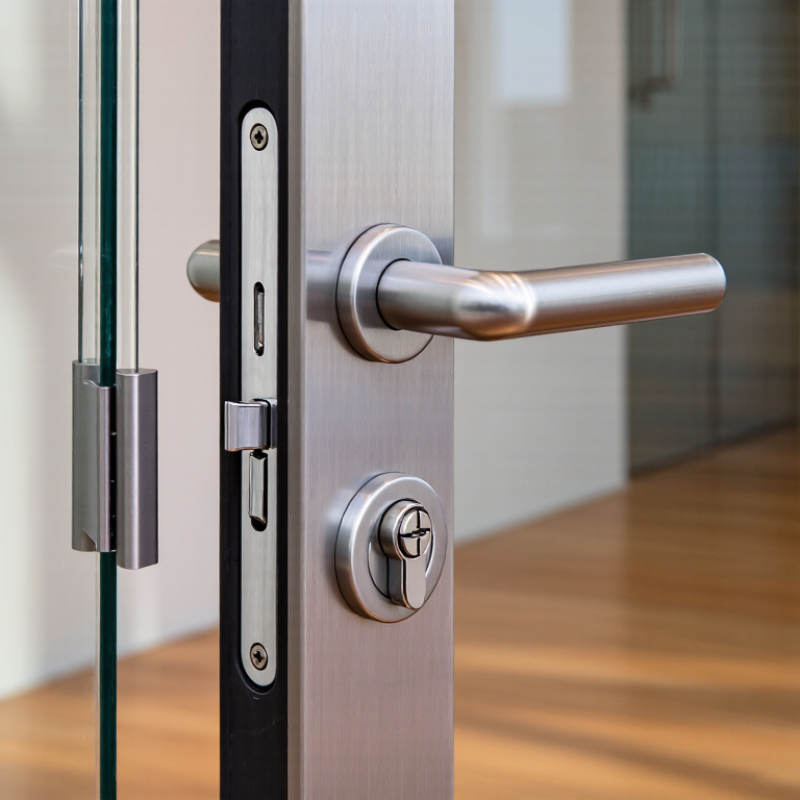
What Is the Average Lifespan of Aluminum Door Hardware in China?
China Top Aluminum Door Hardware Average Lifespan?
The average lifespan of aluminum door hardware in China is about 8 to 15 years. This estimate covers handles, hinges, locks, rollers, and related fittings. The aluminum frame may last longer, but moving parts usually wear first. High-use doors in offices, apartments, and shops may need replacement after 5 to 8 years.
Usage conditions strongly affect service life. Coastal cities expose hardware to salt air and high humidity. Inland areas may create different problems, including dust, temperature changes, and dry friction. A door opened dozens of times daily experiences faster wear. Poor alignment can also damage hinges and locks within months.
Installation quality matters greatly. Experienced installers check the frame position, screw tension, drainage, and door weight. Stainless or corrosion-resistant components often perform better in damp environments. Regular cleaning and light lubrication can extend working life, although excessive oil may attract dust. Inspect the handle for looseness, listen for hinge noise, and replace damaged seals early.
A well-installed aluminum door may keep its hardware functional for 12 to 20 years with sensible maintenance. Budget fittings may last less. This is not a laboratory guarantee. Manufacturing batches, building movement, and user habits can change the result. In practice, many failures come from neglected adjustment rather than weak aluminum. A yearly inspection is reasonable, but busy entrances may require checks every few months.
Average Lifespan of Aluminum Door Hardware in China
Indicative average service life under normal residential and light-commercial use in China. Actual durability depends on usage frequency, coastal or humid conditions, installation quality, maintenance, and hardware grade.
Which Factors Affect the Service Life of Aluminum Door Hardware?
China Top Aluminum Door Hardware Average Lifespan?
Aluminum door hardware commonly lasts 10 to 20 years under normal indoor use. Exterior doors may need replacement sooner. Heavy traffic changes the calculation quickly. A busy entrance can cycle thousands of times each year, stressing hinges, locks, closers, and handles. Lifespan is not determined by aluminum alone. Alloy quality, metal thickness, surface treatment, and internal components all matter. Anodized or powder-coated surfaces usually resist moisture better than unfinished metal. Still, coating damage can expose the aluminum and invite corrosion.
Installation quality strongly affects service life. Misaligned doors place uneven pressure on hinges and locking points. Loose screws create movement, noise, and gradual deformation. A small gap may become a serious closing problem. Coastal air, industrial pollution, rain, and winter salt can accelerate deterioration. Indoor humidity also matters, especially near kitchens, bathrooms, and swimming facilities. Stainless steel springs and protected fasteners often perform better in these locations. However, “corrosion-resistant” does not mean corrosion-proof.
Maintenance should include cleaning dust, checking screw tightness, and applying suitable lubricant where required. Avoid abrasive cleaners. They can scratch protective finishes. Inspect door closers for leaking oil, weak control, or sudden impact. Replace worn seals before they overload the hardware. In field checks, poor adjustment often appears before actual material failure. I have also seen well-made hardware fail early because installers ignored door weight. That is an uncomfortable detail. Selecting hardware by appearance alone remains a common mistake. Door size, opening frequency, exposure, and expected load should guide the specification.
How Long Do Different Types of Aluminum Door Hardware Last?
Aluminum door hardware rarely has one fixed lifespan. Its service life depends on traffic, coastal air, installation quality, and maintenance. Laboratory ratings provide useful guidance, but real buildings are less tidy.
Door handles and lever sets commonly reach 100,000 to 200,000 operating cycles under EN 1906 durability classes 6 and 7. In a busy office, that may represent 8–15 years. Hinges tested under EN 1935 can reach 200,000 cycles or more, although poor alignment quickly damages bearings and fixing screws. Door closers often carry a 500,000-cycle durability rating under EN 1154. Heavy entrances may still require adjustment after only five years.
Locks usually last about 7–15 years, depending on dust, key usage, and cylinder quality. Sliding-door rollers may last 3–10 years, especially when grit collects inside the track. Weather seals commonly need replacement after 3–8 years because sunlight and temperature changes harden the material. EN 1670 corrosion classes also show why location matters: coastal installations require higher corrosion resistance than sheltered indoor doors.
These figures are not promises. I have seen a basic handle fail early beside a well-maintained one that remained smooth for years. Cleaning, correct lubrication, tight fasteners, and annual inspection can extend service life. Still, aluminum frames can hide small alignment problems. That is where many lifespan estimates become too optimistic.
How Does Hardware Quality Influence Its Average Lifespan?
China Top Aluminum Door Hardware Average Lifespan?
How Does Hardware Quality Influence Its Average Lifespan?
In practical building inspections, aluminum door hardware often lasts 8 to 15 years. High-quality sets can exceed that range when doors stay aligned and sheltered. The material alone does not decide service life. Quality does. Stronger aluminum alloys resist distortion, while precise machining keeps hinges and locks moving evenly. Poor tolerances create rubbing, loose screws, and early handle failure. Small defects become daily stress.
Surface treatment also matters in humid or coastal areas. A durable coating slows oxidation, fading, and surface wear. Stainless steel springs and reinforced internal parts usually handle repeated cycles better. However, even strong components fail faster when installers overtighten screws or leave the frame misaligned. Correct installation is not a minor detail. It controls pressure on every moving part. Door use also changes the estimate. A busy entrance may complete thousands of cycles monthly, while a private interior door faces far less strain.
Still, lifespan estimates are not exact. I have seen expensive hardware fail after careless installation. I have also seen modest hardware perform well under gentle use. That comparison is uncomfortable, but useful. A quality handle cannot correct a warped frame. Likewise, excellent hardware suffers when water sits around fasteners. Regular checks should record corrosion, looseness, unusual noise, and closing force. These details reveal real wear better than a catalog number.
China Top Aluminum Door Hardware Average Lifespan? - How Does Hardware Quality Influence Its Average Lifespan?
| Hardware Component |
Common Material or Finish |
Standard Quality
Estimated Lifespan |
High Quality
Estimated Lifespan |
Typical Operating Cycles |
Main Quality Factors |
| Door Hinges |
Aluminum alloy, stainless steel, or coated steel |
5–10 years |
10–20 years |
50,000–200,000 |
Load capacity, bearing design, corrosion resistance, and alignment |
| Door Handles and Levers |
Die-cast aluminum, stainless steel, or zinc alloy |
5–10 years |
10–15 years |
100,000–200,000 |
Internal spring strength, spindle accuracy, surface treatment, and fastener quality |
| Mortise Locks |
Stainless steel, brass, or plated steel |
7–12 years |
12–20 years |
100,000–200,000 |
Latch durability, machining precision, corrosion protection, and door fit |
| Cylinders and Cores |
Brass, stainless steel, or hardened steel components |
5–10 years |
10–20 years |
50,000–100,000 |
Pin and tumbler precision, keyway protection, anti-drill features, and lubrication |
| Sliding Door Rollers |
Stainless steel, nylon, POM, or reinforced polymer |
3–8 years |
8–15 years |
50,000–150,000 |
Bearing sealing, wheel hardness, track alignment, load rating, and debris control |
| Multi-Point Locking Systems |
Galvanized steel, stainless steel, and aluminum components |
8–15 years |
15–25 years |
100,000–200,000 |
Gearbox strength, rod rigidity, corrosion resistance, adjustment range, and installation accuracy |
| Door Closers |
Aluminum body with steel or stainless-steel mechanism |
5–10 years |
10–15 years |
500,000–1,000,000 |
Hydraulic seal quality, temperature stability, adjustment valves, and door weight compatibility |
| Weather Seals and Gaskets |
EPDM, silicone, or thermoplastic elastomer |
3–8 years |
8–15 years |
Weathering-dependent |
UV resistance, elasticity retention, temperature range, compression set, and chemical resistance |
| Flush Bolts and Surface Bolts |
Stainless steel, brass, or plated steel |
5–10 years |
10–20 years |
50,000–150,000 |
Rod straightness, spring durability, corrosion protection, and strike-plate alignment |
Interpretation: High-quality aluminum door hardware commonly lasts about 1.5–2 times longer than standard hardware when it is correctly selected, installed, and maintained.
Important conditions: Lifespan varies with door weight, usage frequency, coastal or humid exposure, temperature changes, installation accuracy, cleaning, lubrication, and impact or misuse.
Maintenance reference: Inspect fasteners and alignment every 6–12 months, clean exposed hardware with a mild solution, and use a manufacturer-compatible lubricant where required. Avoid abrasive cleaners and corrosive chemicals.
How Can Aluminum Door Hardware Lifespan Be Extended?
China Top Aluminum Door Hardware Average Lifespan?
Quality aluminum door hardware commonly lasts 10 to 20 years in normal residential use. Heavy commercial doors may need replacement sooner because of frequent opening, impact, and higher loads. Lifespan depends on alloy quality, surface treatment, installation accuracy, and local weather. Coastal air is especially demanding. Salt can attack screws, springs, and concealed mechanisms.
A service technician should inspect hinges, locks, handles, and closers twice a year. Remove dust with a soft cloth and mild soap. Avoid abrasive pads and strong solvents. Lubricate moving parts with a suitable silicone or PTFE product, not cooking oil. Cooking oil attracts grit. Tighten loose screws before the door begins to sag. A small adjustment now can prevent frame damage later. I have seen durable hardware fail early because installers ignored uneven floors or excessive door weight.
Tips: Keep drainage paths clear around outdoor fittings. Replace rusting screws with compatible corrosion-resistant fasteners. Check whether the door closes smoothly without slamming. If a handle feels stiff, investigate the cause instead of forcing it. Even experienced installers sometimes overlook misalignment after building movement. Keep it simple. Record inspection dates and worn components. This small habit improves maintenance decisions and supports more reliable replacement planning.
Conclusion
What is the average lifespan of aluminum door hardware in China? In general, it can last approximately 5 to 15 years, depending on the hardware type, material quality, installation accuracy, frequency of use, and surrounding environment. Hardware used in dry indoor areas may remain functional for many years, while products exposed to moisture, salt air, dust, or heavy traffic may require earlier replacement. Hinges, handles, locks, closers, and sliding components also have different service lives because they experience different levels of friction and mechanical stress.
Hardware quality has a direct influence on durability. Strong aluminum alloys, reliable surface treatments, precise manufacturing, and well-designed internal parts can improve resistance to corrosion, wear, and deformation. To extend service life, users should choose suitable hardware, ensure professional installation, clean surfaces regularly, lubricate moving parts when appropriate, tighten loose screws, and repair minor problems promptly. With proper selection, maintenance, and daily use, aluminum door hardware can maintain stable performance and appearance for a longer period.
 Angulo Window
