Angulo Window Angulo Window

Top Anodized vs Powder Coated Aluminum Differences?

Time:2026-10-08 Author:Isabella
0%

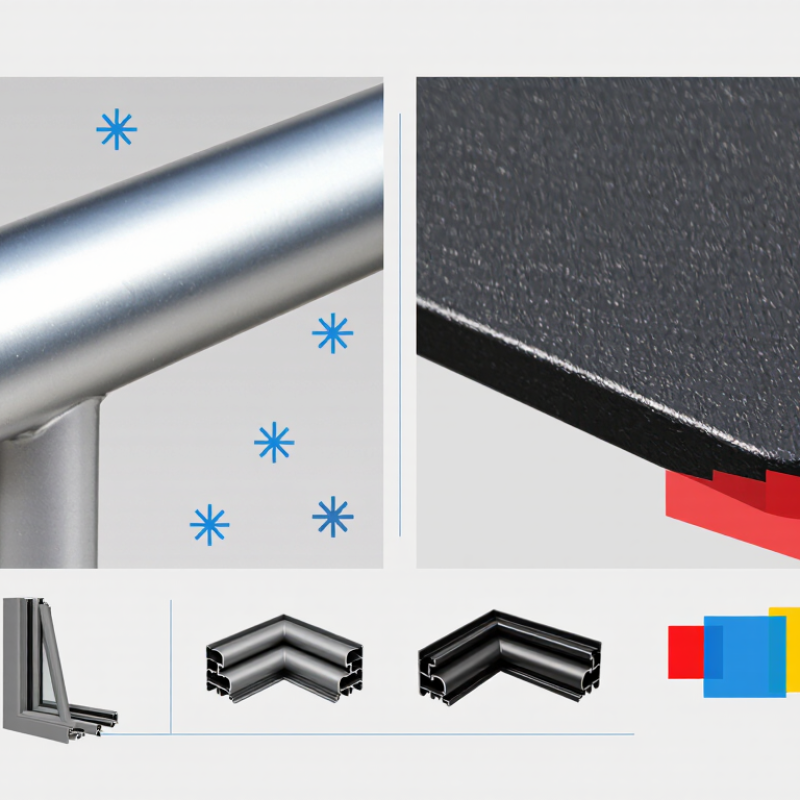
Choosing between anodized and powder-coated aluminum can shape a product’s appearance, service life, and maintenance needs. The decision affects window frames, railings, signage, machinery housings, and outdoor furniture. A smooth silver handrail may use anodizing, while a textured black panel often uses powder coating. These finishes look similar from a distance. Their performance differs under real conditions.

Many buyers ask, “what is the difference between anodized and powder-coated aluminum?” Anodizing electrochemically strengthens the aluminum’s natural oxide layer. It creates a thin, hard surface that resists fading, peeling, and minor abrasion. Powder coating applies dry polymer powder, which is cured with heat. This process produces thicker coverage, richer colors, and many texture options. However, coating quality depends heavily on cleaning, pretreatment, powder selection, and curing control.

Small details matter.

In practical projects, anodized aluminum often suits modern façades, coastal components, and areas requiring a metallic appearance. Powder coating may be better for bold colors, visual branding, or surfaces needing broader design flexibility. Yet neither finish is universally superior. Salt exposure, ultraviolet radiation, impact risk, cleaning chemicals, and repair expectations can change the result. Even experienced manufacturers can misjudge a finish when the service environment is poorly understood. That is why reliable comparisons should include substrate preparation, coating thickness, testing records, and installation conditions. This guide examines the differences with a balanced, application-focused approach, helping readers choose more confidently without treating one finish as the automatic answer.
Top Anodized vs Powder Coated Aluminum Differences?

What Anodizing and Powder Coating Mean

Anodizing and powder coating are different finishing processes, not interchangeable paint choices. Anodizing uses an electrochemical reaction to thicken aluminum’s natural oxide layer. The surface remains metallic, showing grain, highlights, and subtle color variation. Typical architectural anodic films measure about 10–25 micrometres. ISO 7599 defines requirements for decorative and protective anodic oxidation coatings.

Powder coating applies electrically charged dry particles to aluminum. Heat then melts and cures them into a continuous polymer film. Typical thickness ranges from 60–120 micrometres, depending on the specification and part geometry. AAMA 2603, 2604, and 2605 classify increasing coating performance requirements, including weathering and color retention. Higher classifications demand stronger testing. They do not guarantee identical field results.

Anodizing usually handles abrasion and ultraviolet exposure well, but scratches remain visibly metallic. Powder coating offers broader colors, textures, and stronger visual coverage over minor surface differences. It can also hide small marks, although poor pretreatment may cause blistering or edge failure. A 2023 industry lifecycle assessment found aluminum recycling uses roughly 5% of the energy required for primary aluminum production, making repair and recycling important for either finish. The choice is not always obvious. A clean specification can still fail on sharp edges, concealed moisture, or inconsistent alloy composition. Testing the actual alloy and profile is wiser than trusting a sample panel alone.

How Each Aluminum Finishing Process Works

Anodizing and powder coating change aluminum in fundamentally different ways. Anodizing is an electrochemical process. The aluminum part becomes the anode in an acidic electrolyte bath. Electricity thickens its natural oxide layer. Dyes may enter the pores before sealing. Typical architectural anodizing creates a surface layer of about 10–25 micrometers, according to AAMA performance specifications. The coating becomes part of the metal surface. It will not peel like a separate film.

Powder coating follows a different route. Operators electrically charge dry resin powder and spray it onto grounded aluminum. The coated part then enters an oven, commonly around 180–200°C. The powder melts, flows, and chemically cross-links into a continuous film. Typical architectural powder layers measure roughly 60–120 micrometers. The U.S. Environmental Protection Agency’s AP-42 guidance recognizes powder coating as a low-VOC process, especially when overspray is recovered. That environmental advantage depends on proper collection and curing.

Anodizing preserves a metallic appearance and offers strong resistance to ultraviolet exposure. Powder coating provides broader colors, thicker coverage, and better concealment of minor surface marks. AAMA 2604 and AAMA 2605 set increasingly demanding requirements for exterior powder finishes, including weathering and adhesion performance. Still, thicker is not always better. Poor pretreatment can cause blistering, while anodizing can reveal scratches permanently. The easy comparison misses an important detail: alloy choice, cleaning, sealing, and installation often control the final result more than the finish name. That deserves careful review.

Top Anodized vs Powder Coated Aluminum Differences

How each aluminum finishing process works

The chart uses representative midpoint values from common industrial ranges. Anodized layers are typically about 10–25 μm thick and formed electrochemically within the aluminum surface, while powder coatings are commonly about 60–120 μm thick and cured at approximately 160–200°C. Actual values vary by alloy, specification, and application.

Key Performance Differences Between Anodized and Powder Coated Aluminum

Top Anodized vs Powder Coated Aluminum Differences?

Anodizing changes the aluminum surface itself through an electrochemical process. This creates a hard, mineral-like oxide layer that will not peel like a separate film. AAMA 611 classifies architectural anodic coatings by thickness. Class I requires at least 18 microns, while Class II requires at least 10 microns. The finish handles sunlight well and keeps a metallic appearance. Scratches can still expose the base metal, and repairs often remain visible.

Powder coating adds a cured polymer layer over prepared aluminum. According to AAMA 2604 and AAMA 2605 performance requirements, qualified coatings undergo adhesion, impact, humidity, corrosion, and accelerated weathering tests. The coating offers broader color choices and better visual coverage over minor surface variations. It can also provide useful impact resistance. However, poor pretreatment may cause blistering or edge corrosion. That detail matters more than many product comparisons admit.

Field conditions change the decision. An anodized handrail may retain its texture beside a sunny window, while a dark powder-coated panel can absorb more heat and fade sooner. Powder coating is often easier to repair visually, but matching an aged color is not simple. Anodizing usually gives a more consistent metallic depth, yet it cannot hide casting marks or welding changes. The Aluminum Association identifies surface preparation and alloy selection as major factors in aluminum finishing performance. The finish is only part of the system.

Comparing Appearance, Color Options, and Surface Texture

Anodized aluminum has a thin, durable oxide layer created through an electrochemical process. Its appearance is usually clean, metallic, and slightly translucent. Brushed anodized panels can show fine linear grain under office lighting. Smooth finishes reveal the aluminum’s natural character instead of hiding it. Color choices often include silver, bronze, black, and muted earth tones. Bright custom colors are more difficult to achieve consistently.

Powder coating uses a pigmented powder cured onto the aluminum surface. It can produce matte, satin, gloss, or textured finishes. The texture may resemble fine sand, orange peel, or a soft architectural grain. Color selection is much broader, including strong reds, deep blues, and carefully matched neutral shades. However, thick coatings can soften sharp edges and hide small surface details. The final color may also shift slightly between production batches.

In practical fabrication work, anodizing suits designs that need a metallic appearance and visible grain. Powder coating works well when designers want bold color or a consistent opaque surface. Neither finish is perfect. Anodized samples can vary with alloy composition and viewing angle. Powder-coated surfaces may show scratches more clearly on dark colors. I have also found that small sample boards can mislead the eye. Full-size panels should be reviewed outdoors and under the project’s actual lighting. Texture matters more than many drawings suggest. A fingertip can detect differences that a screen cannot.

How to Choose the Right Aluminum Finish for Your Project

Choosing the right aluminum finish starts with the project’s real exposure, not a color preference. Anodizing creates an electrolytic oxide layer within the metal, so it keeps a metallic appearance and resists peeling. Powder coating adds a cured polymer film, offering broader colors, stronger visual coverage, and easier design matching. Neither finish wins every test.

For coastal façades, anodizing can provide reliable weather resistance when the alloy, sealing, and cleaning schedule are controlled. Powder coating may suit railings, doors, and equipment needing bold colors or textured surfaces. The U.S. Environmental Protection Agency identifies powder coating as a low-VOC alternative to many liquid coatings. However, damaged powder film can expose bare aluminum, while anodized surfaces may show scratches that are difficult to repair invisibly. AAMA 611 and AAMA 2604/2605 provide useful performance benchmarks for anodized and coated aluminum. The International Aluminium Institute reports that recycling aluminum uses about 95% less energy than producing primary aluminum, so finish durability also affects long-term environmental value.

Tips: Request a sample panel using the exact alloy, pretreatment, color, and gloss level. Test it near salt spray, direct sunlight, or cleaning chemicals. Check edges and fastener areas closely. A color chart is not enough. Also, confirm whether future touch-ups matter; this is where many specifications become overly optimistic.

Top Anodized vs Powder Coated Aluminum Differences? - How to Choose the Right Aluminum Finish for Your Project

Comparison Criterion Anodized Aluminum Powder-Coated Aluminum
Finishing process An electrochemical process that thickens the aluminum oxide layer on the surface. The finish becomes part of the metal surface. A dry polymer powder is electrostatically applied and then heat-cured to form a protective film over the aluminum.
Typical finish thickness Common architectural anodizing is approximately 5–25 micrometers, depending on the specification and exposure. Common powder-coating films are approximately 60–120 micrometers after curing, depending on the coating system and specification.
Appearance Usually produces a metallic, satin, brushed, or clear appearance. The aluminum grain and surface preparation remain visible. Provides smooth, textured, matte, or gloss appearances. It generally creates a more uniform, opaque surface.
Color selection Color options are more limited and depend on the alloy, anodizing method, dye, and batch control. Metallic variation may occur. Offers a broad range of standard and custom colors, gloss levels, and textures. Exact matching still requires approved samples.
UV and color stability Generally provides strong resistance to sunlight because the oxide layer is inorganic. Dark or dyed finishes can still change with prolonged exposure. Performance depends strongly on the resin and pigment system. Exterior-grade formulations typically provide better UV and color retention than standard interior powders.
Scratch and abrasion resistance The hard oxide surface resists general wear well, but it can be scratched by sharp or harder objects. Damage cannot be locally recoated to look identical. Good resistance is available, especially with suitable pretreatment and coating chemistry, but the film can chip, gouge, or expose the aluminum underneath.
Corrosion protection Improves the natural corrosion resistance of aluminum. It is not a complete barrier, and exposed cut edges, damaged areas, or unsuitable environments require attention. Can provide strong barrier protection when pretreatment, film thickness, curing, and edge coverage are properly controlled.
Severe or coastal environments Can be suitable when the anodizing grade, sealing quality, alloy, and installation details are selected for the exposure conditions. Can be suitable with a corrosion-resistant pretreatment and an exterior-grade coating system specified for high humidity or salt exposure.
Repairability Field repairs are difficult to blend because the finish is integrated with the surface. Replacement or refinishing is often preferred for visible damage. Small damage can sometimes be touched up, although color, gloss, and texture may not match perfectly. Severe damage may require stripping and recoating.
Edge and complex-shape coverage Provides relatively consistent surface treatment, but sharp edges, welds, and alloy differences can create visible shade or texture variation. Can cover complex profiles, but recesses, sharp edges, and Faraday-cage areas may receive less powder unless application is carefully controlled.
Dimensional impact Adds a relatively thin surface layer, making it useful where tight fit and profile dimensions are important. Adds a thicker film and requires allowance at mating surfaces, threads, holes, and close-tolerance components.
Heat exposure during finishing Normally processed without the high-temperature curing cycle used for powder coating. Usually requires oven curing at approximately 160–200°C, depending on the powder formulation and manufacturer’s specifications.
Environmental considerations Uses an aqueous chemical process and requires responsible management of process water and chemicals. The finished oxide layer contains no organic coating film. Powder application can have low overspray waste because unused powder may be recovered in suitable systems. Curing requires heat energy.
Typical applications Window and door frames, curtain walls, handrails, trim, interior architectural details, and applications where a metallic appearance is desired. Outdoor furniture, railings, equipment housings, architectural panels, signage, structural components, and projects requiring broad color choice.
Best choice when You want a natural metallic appearance, a thin durable surface treatment, strong general weatherability, and minimal change to component dimensions. You need extensive color and texture options, thicker barrier protection, a highly uniform opaque finish, or easier cosmetic touch-up options.

Selection note: Actual performance depends on the aluminum alloy, surface preparation, pretreatment, coating or anodizing specification, film thickness, sealing quality, installation details, and service environment. Always confirm requirements with finish samples and the applicable project standard.

FAQS

What appearance does anodized aluminum usually provide?

It keeps a clean, metallic look with a slightly translucent quality. Brushed surfaces may show fine linear grain under office lighting. Smooth finishes reveal the aluminum’s natural character.

Which finish offers more color choices?

Powder coating usually provides a wider color range, including strong reds, deep blues, and matched neutrals. Anodizing commonly offers silver, bronze, black, and muted earth tones. Bright anodized colors can be difficult to reproduce consistently.

How do the surface textures differ?

Anodized aluminum may feel smooth or lightly brushed. Powder coating can feel matte, satin, glossy, sandy, or softly textured. Your fingertip may notice differences that a screen misses.

Which finish suits a design needing a metallic appearance?

Anodizing is often suitable when visible grain and natural metal character matter. It works well for panels where the aluminum should remain visually present. Viewing angle can still change its apparent color.

When is powder coating a practical choice?

Powder coating suits doors, railings, and equipment needing bold color or an opaque surface. It can also create textured finishes. Thick coatings may soften sharp edges and hide tiny details.

Which finish is better for outdoor or coastal exposure?

Anodizing can perform reliably near the coast when alloy, sealing, and cleaning are controlled. Powder coating may also work, depending on preparation and exposure. Neither option should be selected from color alone.

Can scratches be repaired easily on both finishes?

Not always. Scratches on anodized aluminum can be difficult to repair invisibly. Damaged powder coating may expose bare aluminum. Dark powder-coated colors can make scratches stand out sharply.

How should finish samples be evaluated?

Request a panel using the exact alloy, pretreatment, color, and gloss level. Review it outdoors and under the project’s actual lighting. Check edges, fasteners, salt spray, sunlight, and cleaning chemicals.

Can small samples accurately predict the final appearance?

Sometimes, but not reliably. Small boards can mislead the eye about color and texture. Full-size panels provide better evidence. I have trusted tiny samples before, and that was not always wise.

How does finish durability affect environmental value?

A longer-lasting finish may reduce replacement work and material waste. Recycled aluminum requires far less energy than producing new aluminum. The real outcome depends on maintenance, repair, and service life.

Conclusion

Anodized and powder-coated aluminum are two popular finishing methods that improve appearance, durability, and resistance to environmental wear. Anodizing uses an electrochemical process to strengthen the aluminum’s natural oxide layer, creating a hard, integrated surface that resists fading, scratching, and corrosion. Powder coating applies a dry colored powder that is cured with heat, forming a protective film over the metal. This process offers broader color choices, richer textures, and greater flexibility for decorative designs.

When considering what is the difference between anodized and powder-coated aluminum, the main factors are performance, appearance, and project requirements. Anodized aluminum usually provides a metallic, semi-transparent finish with consistent texture and strong surface hardness, while powder-coated aluminum can deliver smooth, matte, glossy, or textured effects in many colors. Anodizing may be preferred for architectural applications that need a natural metal appearance and long-term stability. Powder coating is often suitable when color variety, visual customization, and strong general protection are the main priorities.

Isabella

Isabella

Isabella is a dedicated marketing professional with a sharp focus on driving brand growth and engagement through strategic content creation. With an extensive background in digital marketing, she combines her passion for storytelling with her keen understanding of industry trends to deliver......